Gdańsk Medical Chamber Training center / 2020
Location
idea
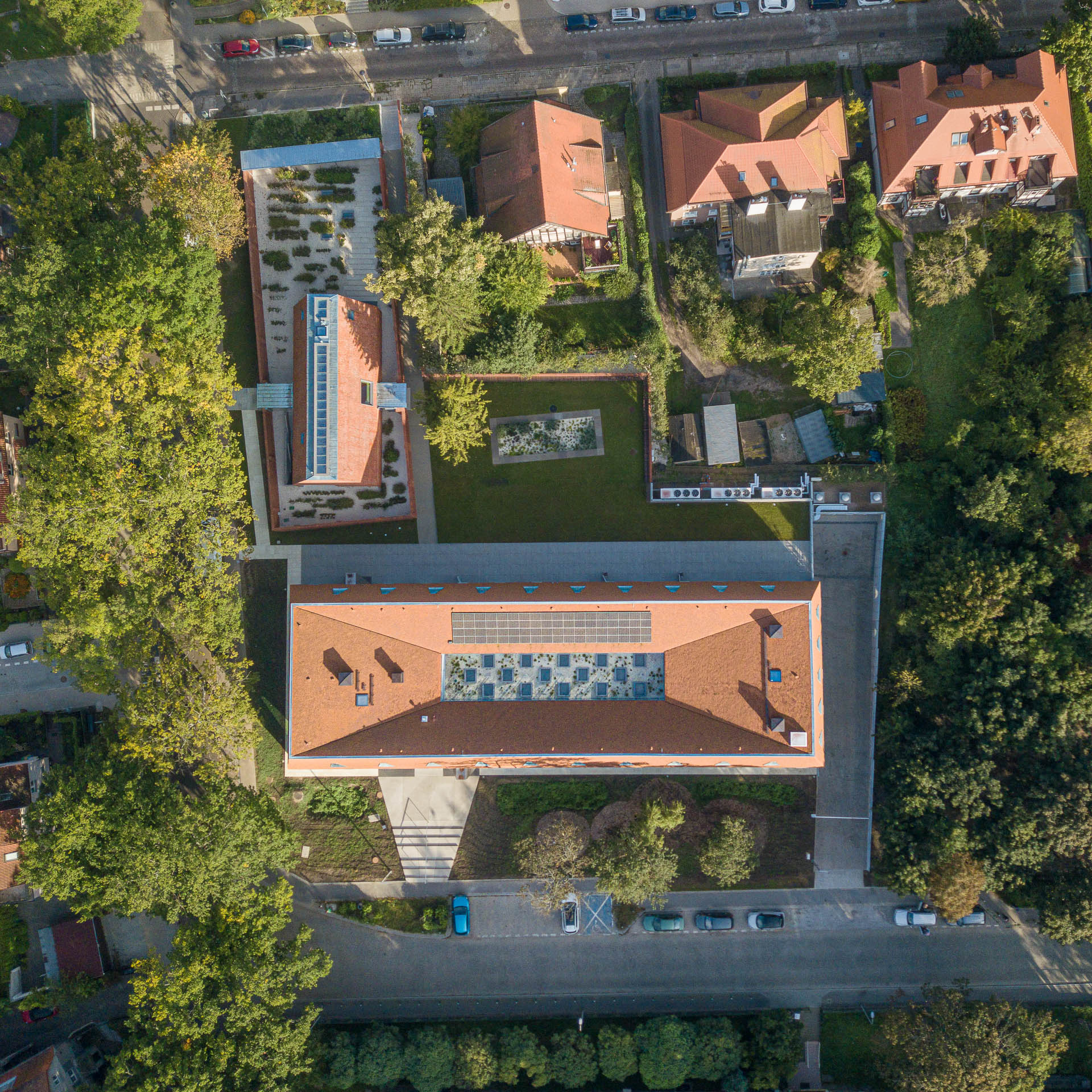
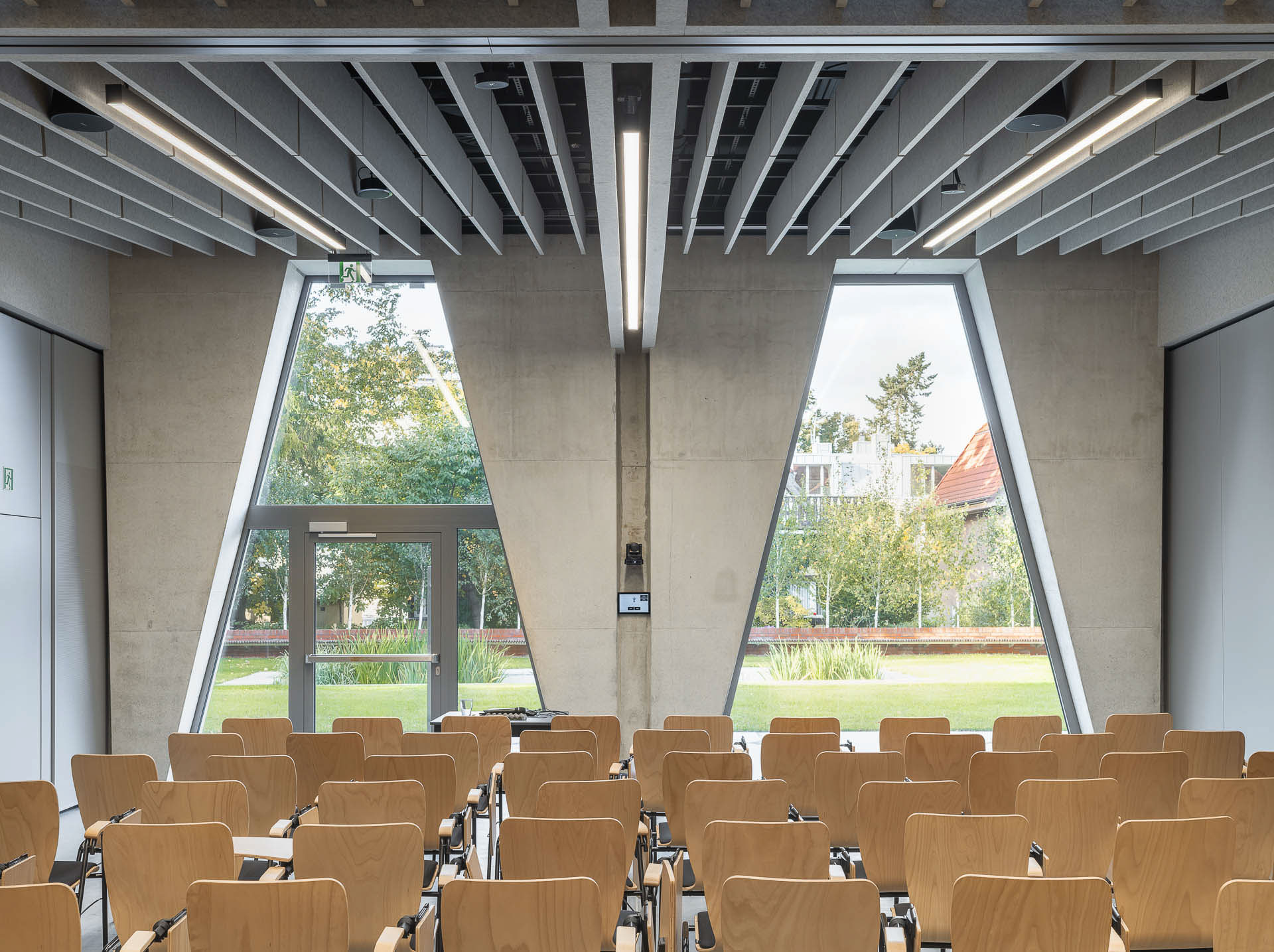
The Centre was built to provide continuous training and professional development for physicians, in line with the dynamic growth of medical sciences and evolving pedagogical methods. The flexible space supports lectures, workshops, small-group work, multimedia presentations and simulation exercises, while also encouraging informal meetings and the exchange of experience. Modular partition systems and mobile dividers allow rapid reconfiguration from a single hall into six independent rooms, and seamless hosting of conferences, banquets and exhibitions.
Conditions from the masterplan
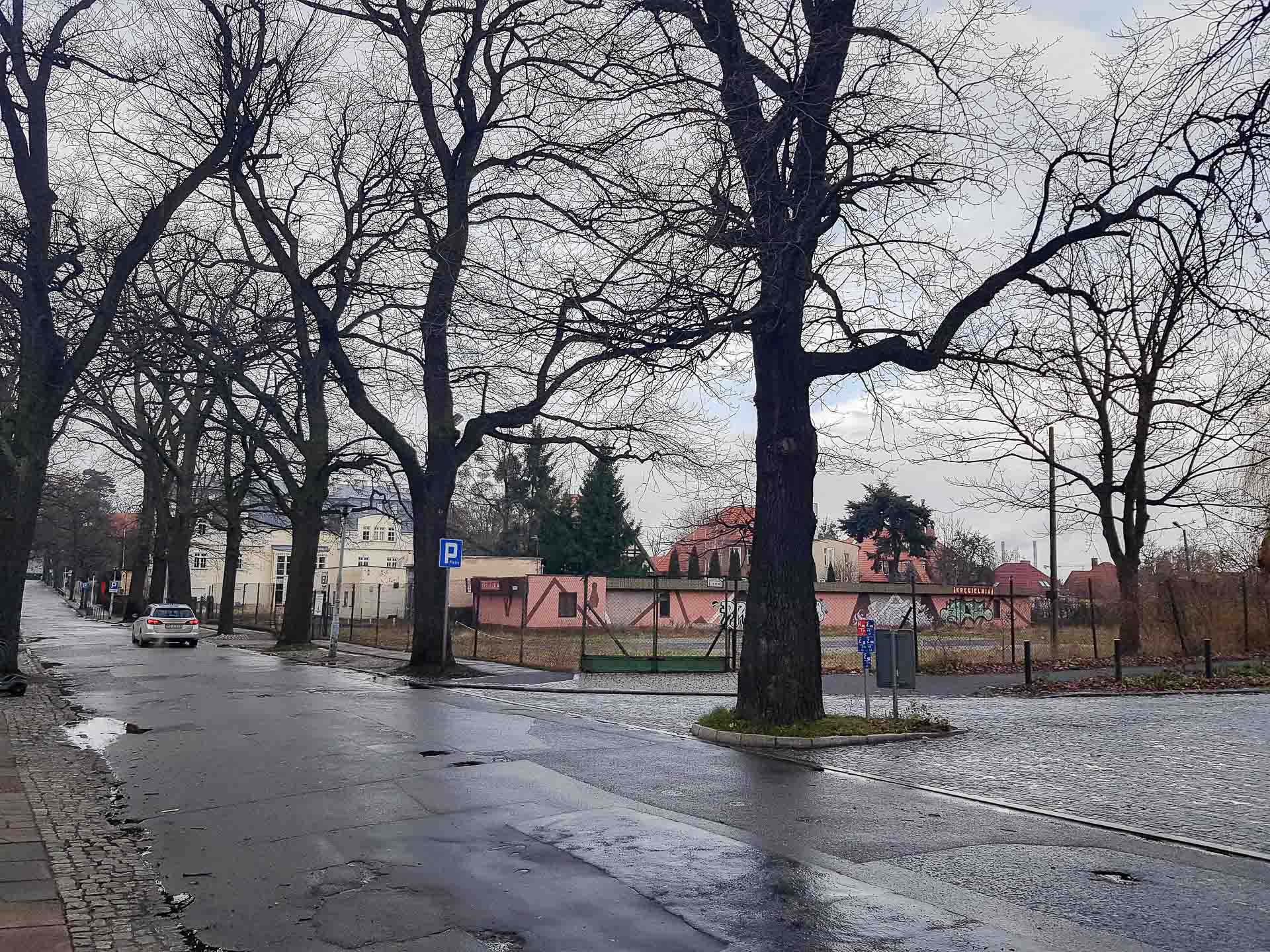
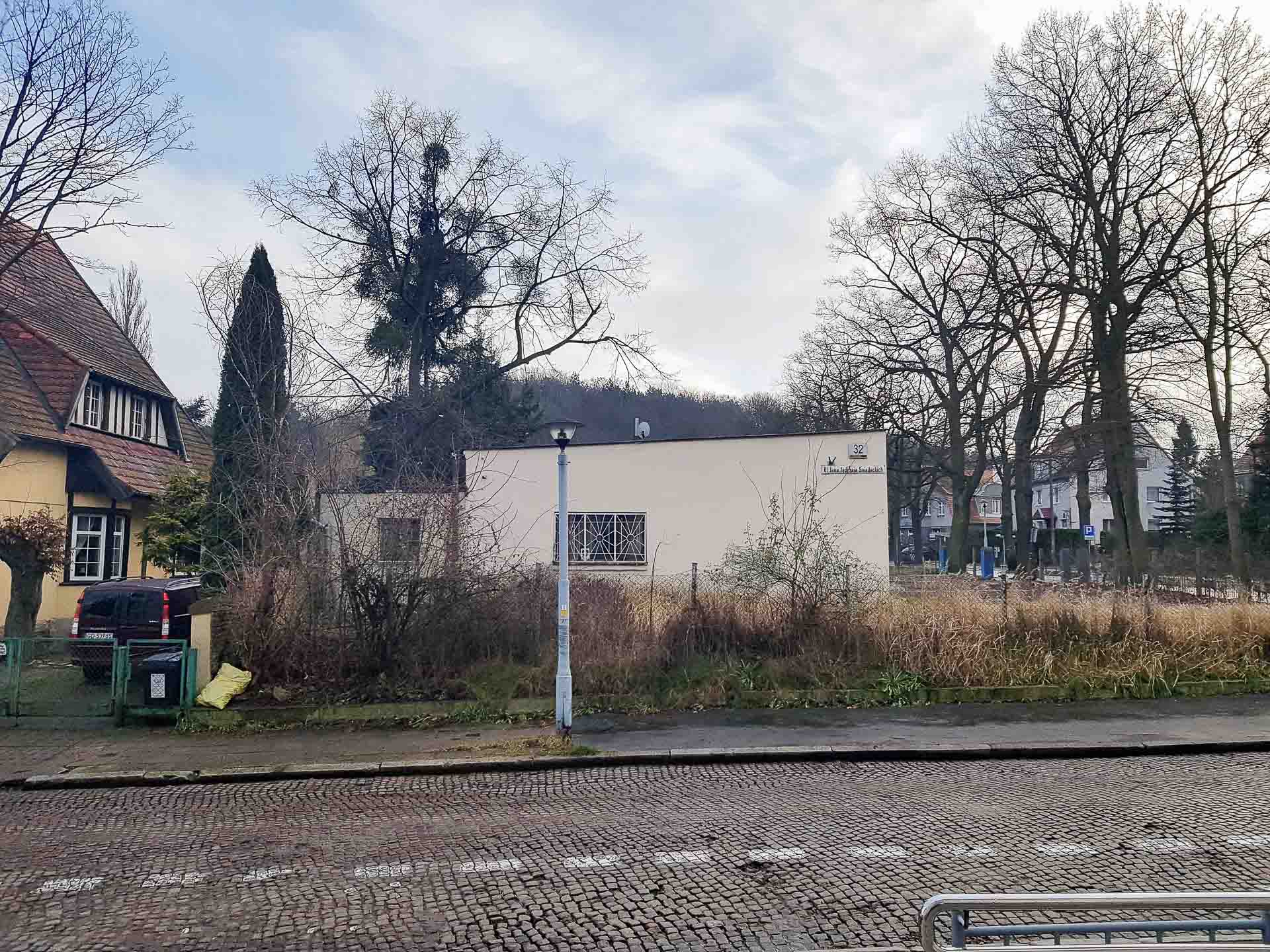
Local Spatial Development Plan
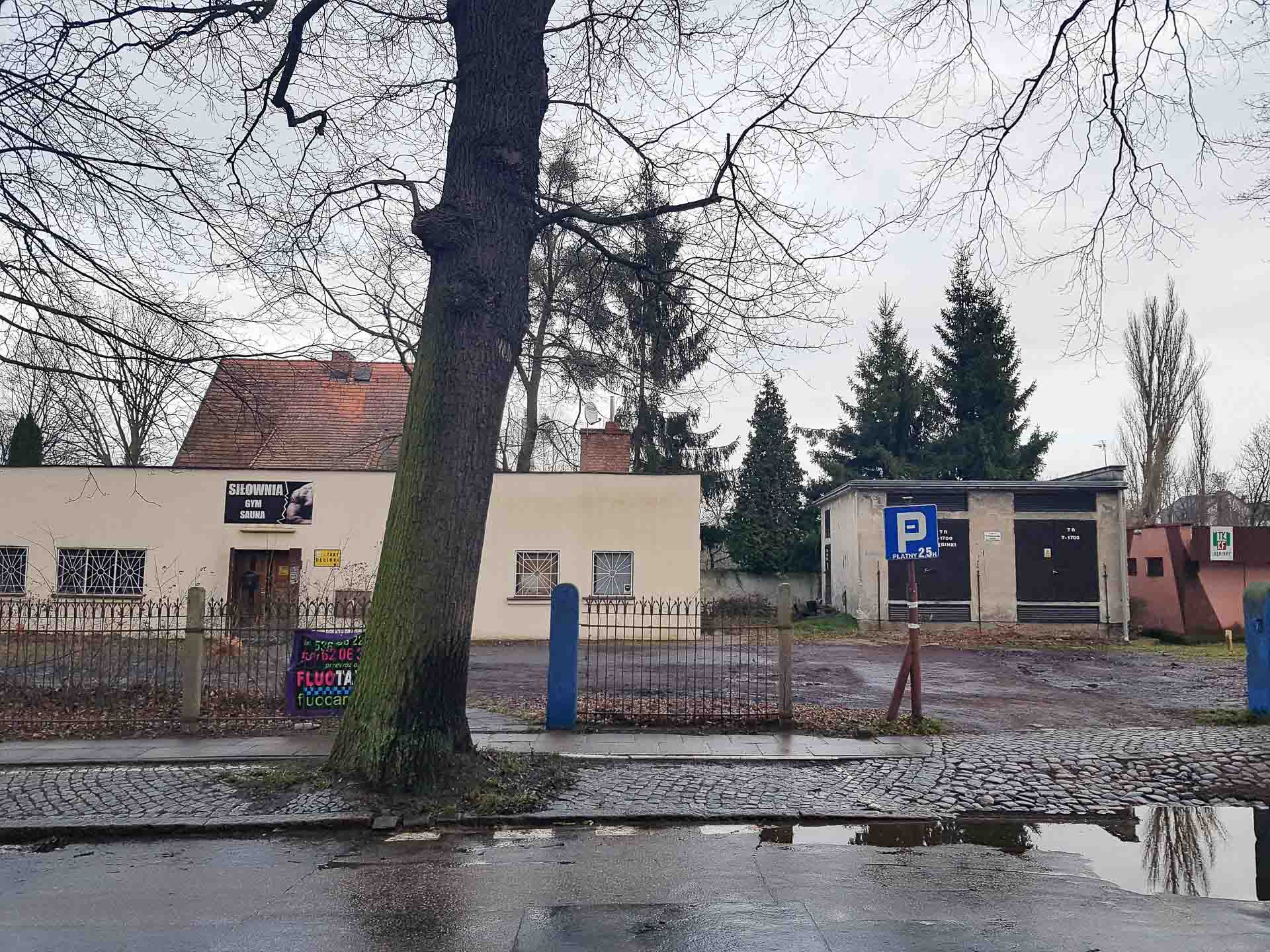
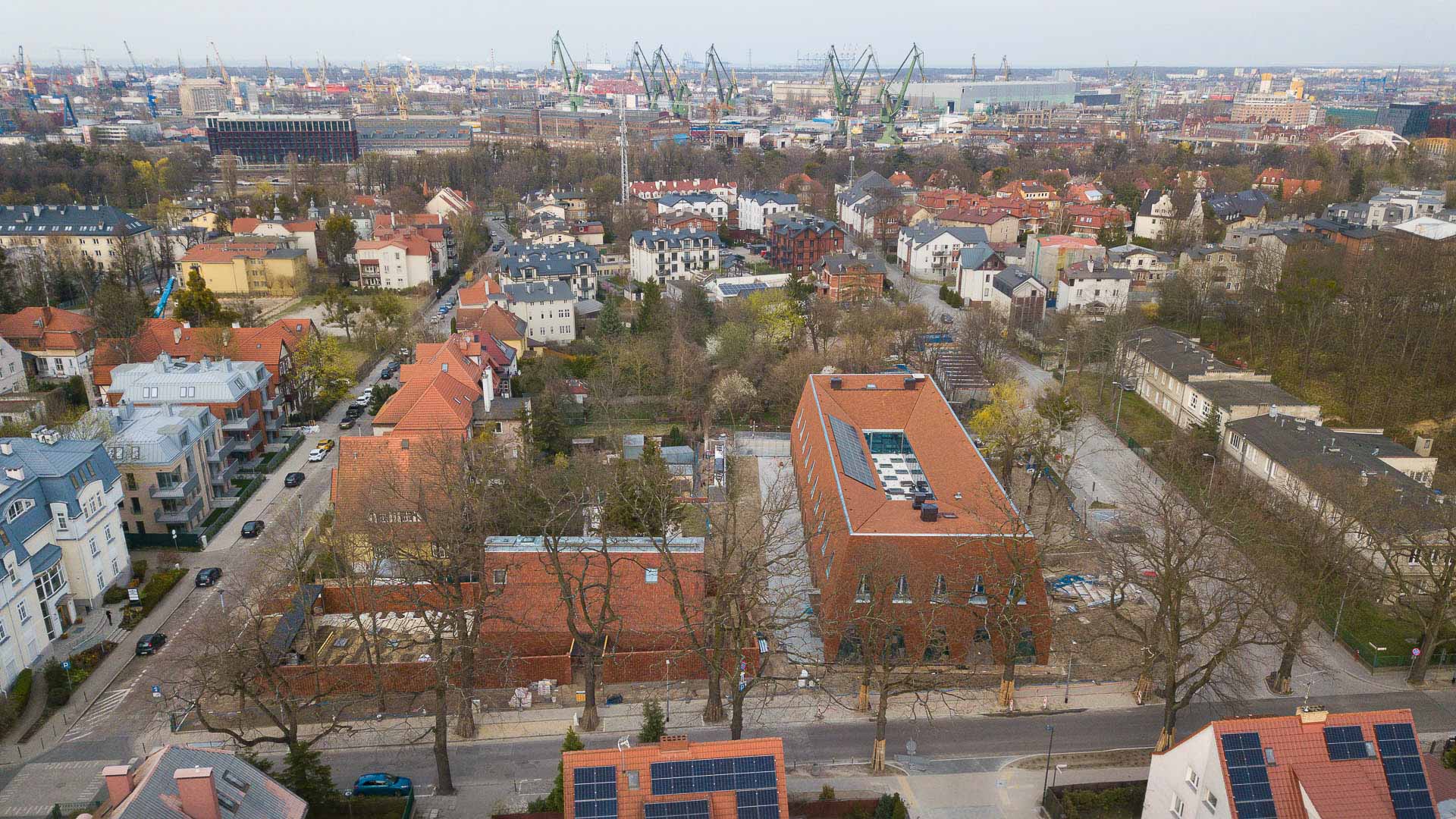
The Local Spatial Development Plan provides for the protection of the character of the Aniołki district. The predominantly pre-war villa-style development, with typical dimensions of approximately 20 × 20 meters in plan and about 12 meters in height, is immersed in a green canopy of mature trees. Narrow streets lined with rows of trees, along with sidewalks closely adjoining property fences, do not allow for the creation of parking bays. Buildings of larger volume are relatively rare. Exceptions include facilities of the Gdańsk Medical University.
The district has relatively few open public spaces and limited services other than medical ones. This was precisely the reason behind the decision to retain part of the training center of the Regional Medical Chamber of Gdańsk as a publicly accessible space.
bird's eye view

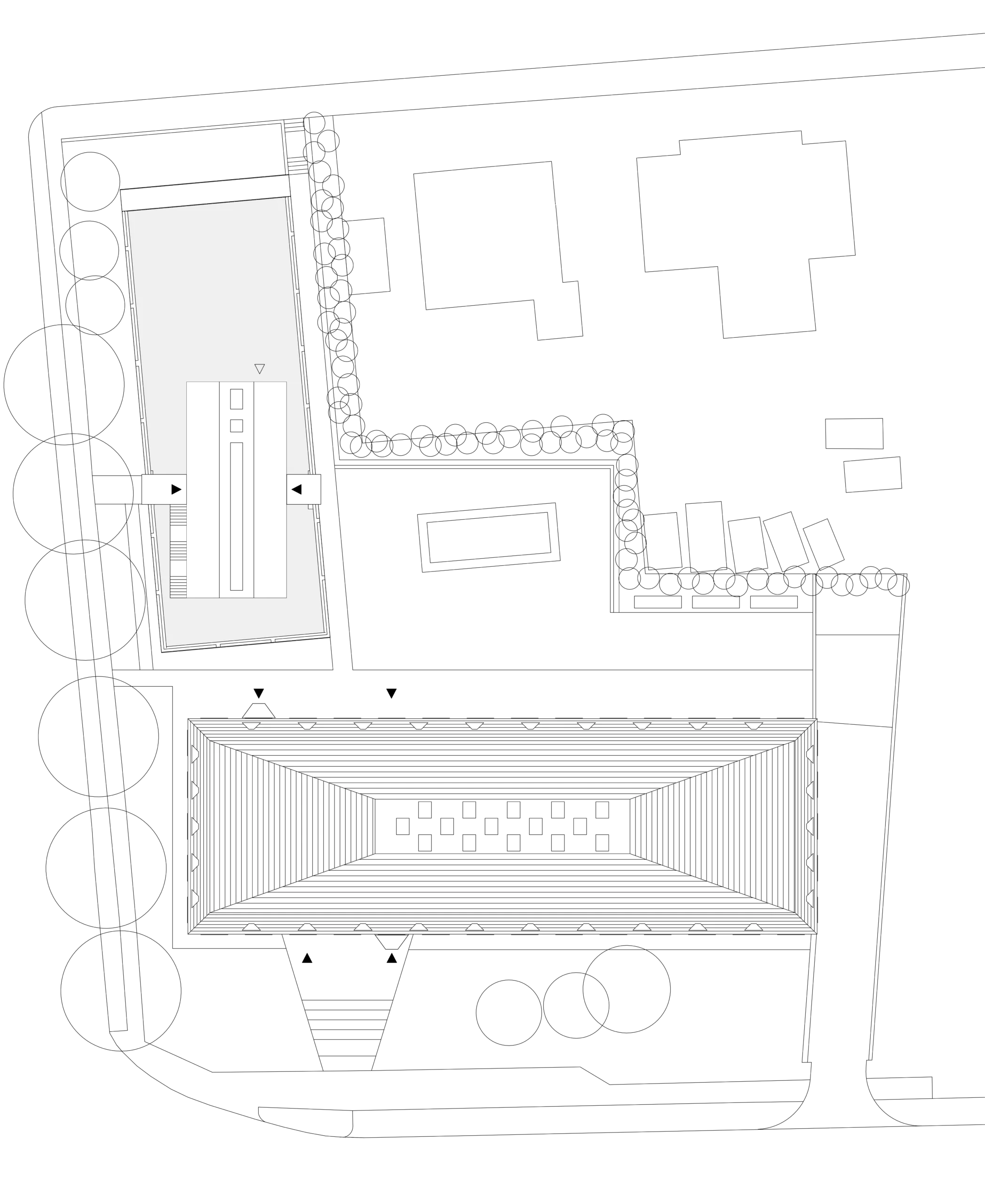
site layout
floorplans



view from the top










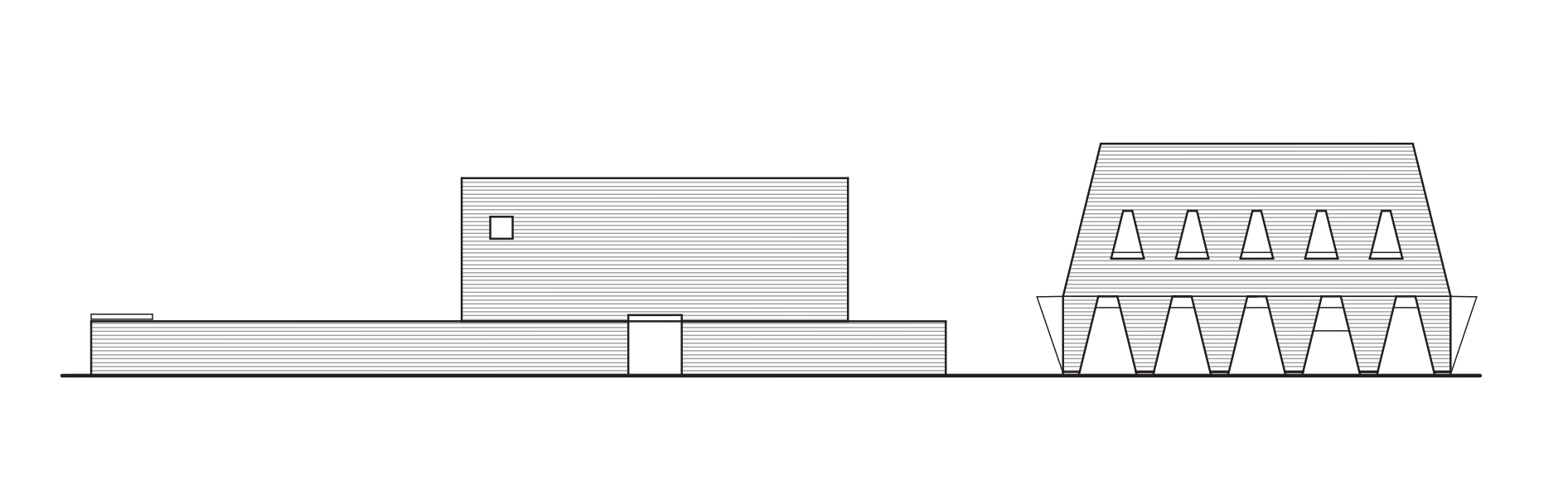
elevations
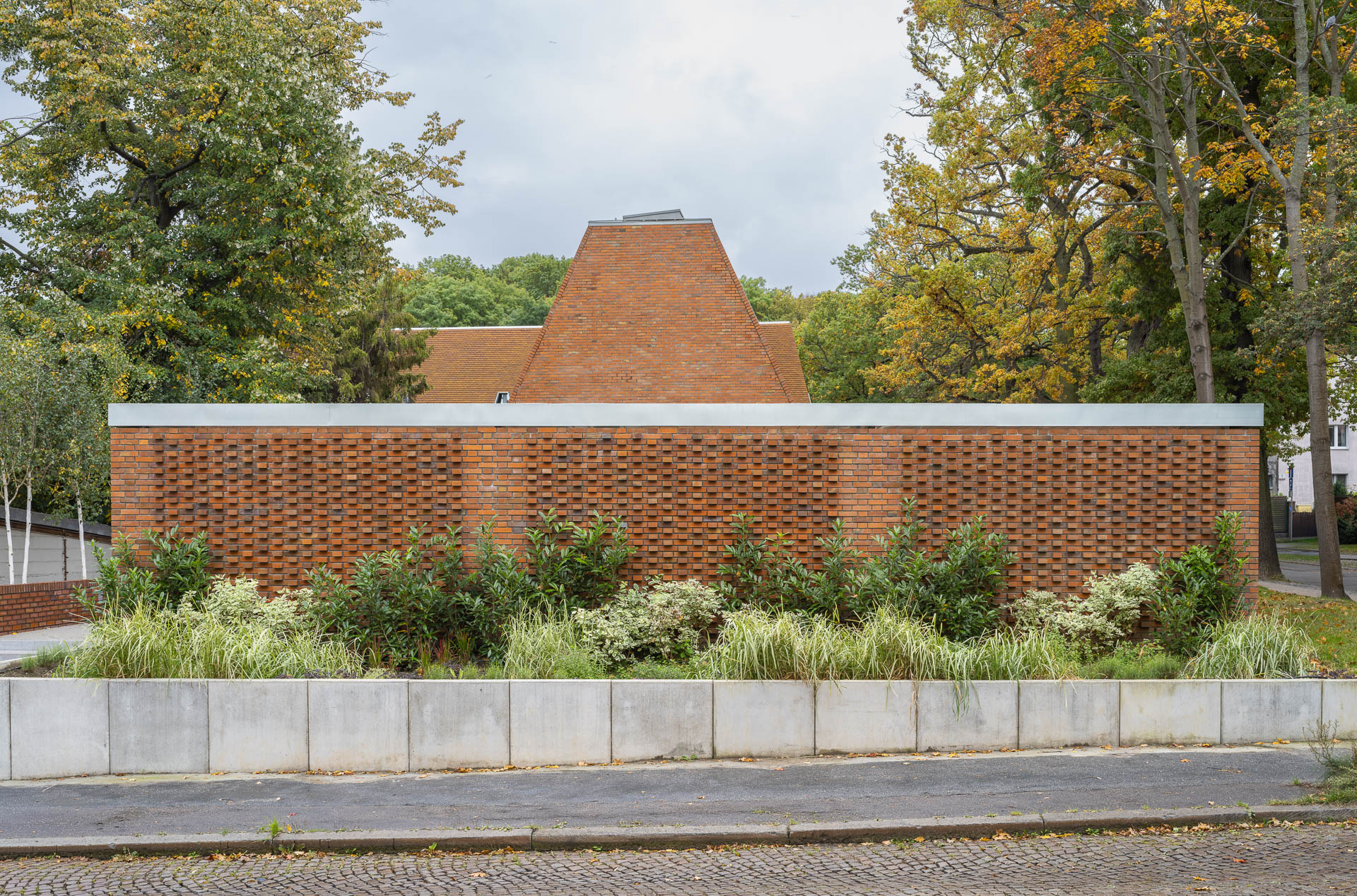
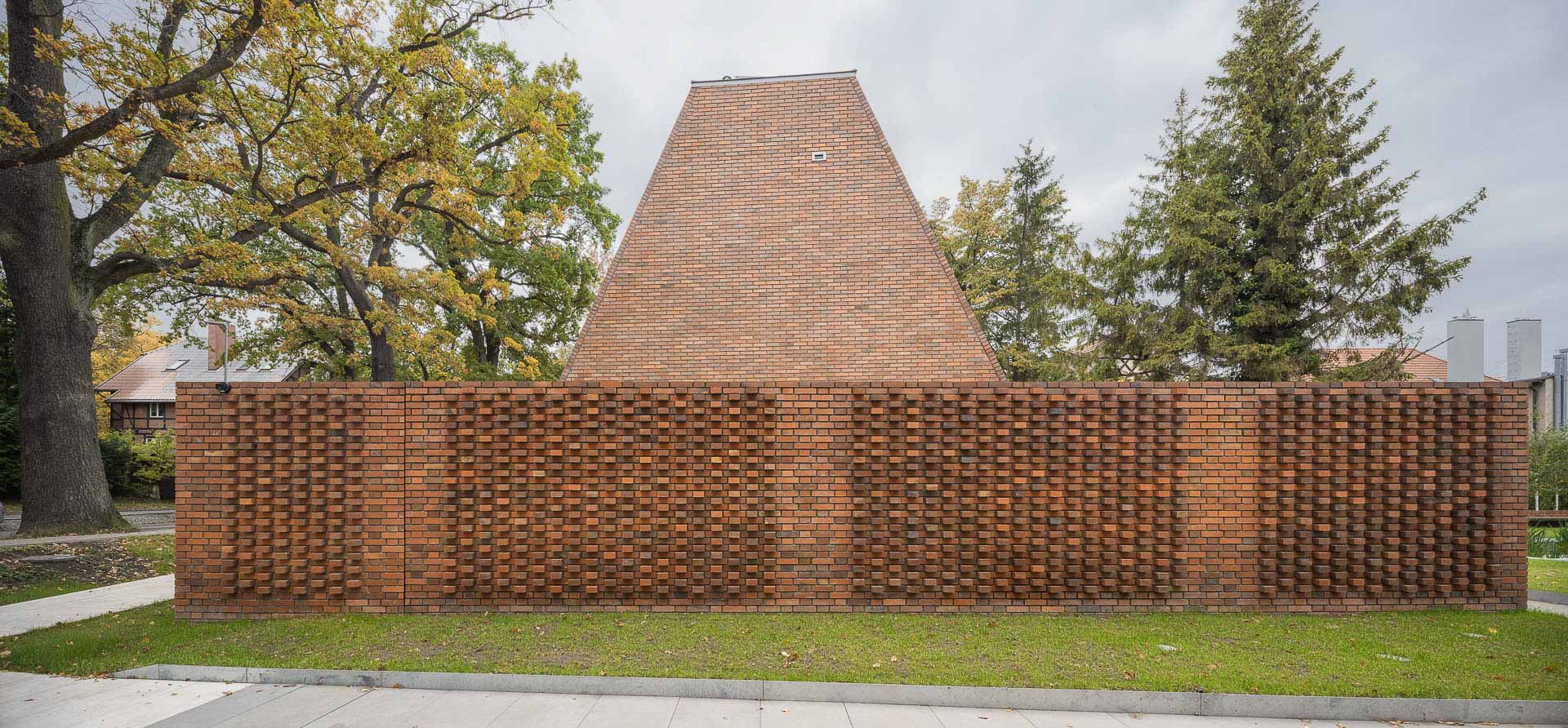
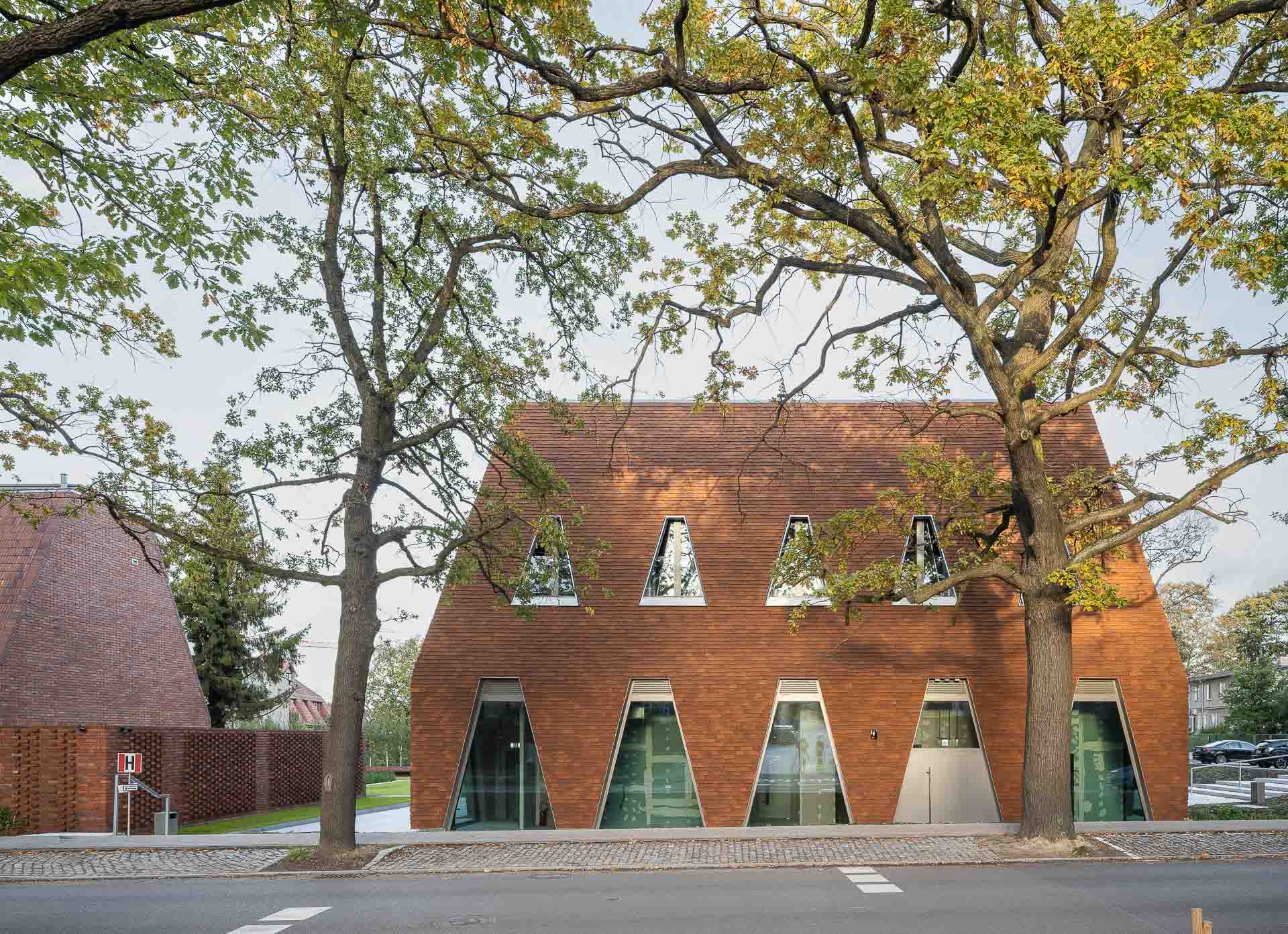
two pavilions
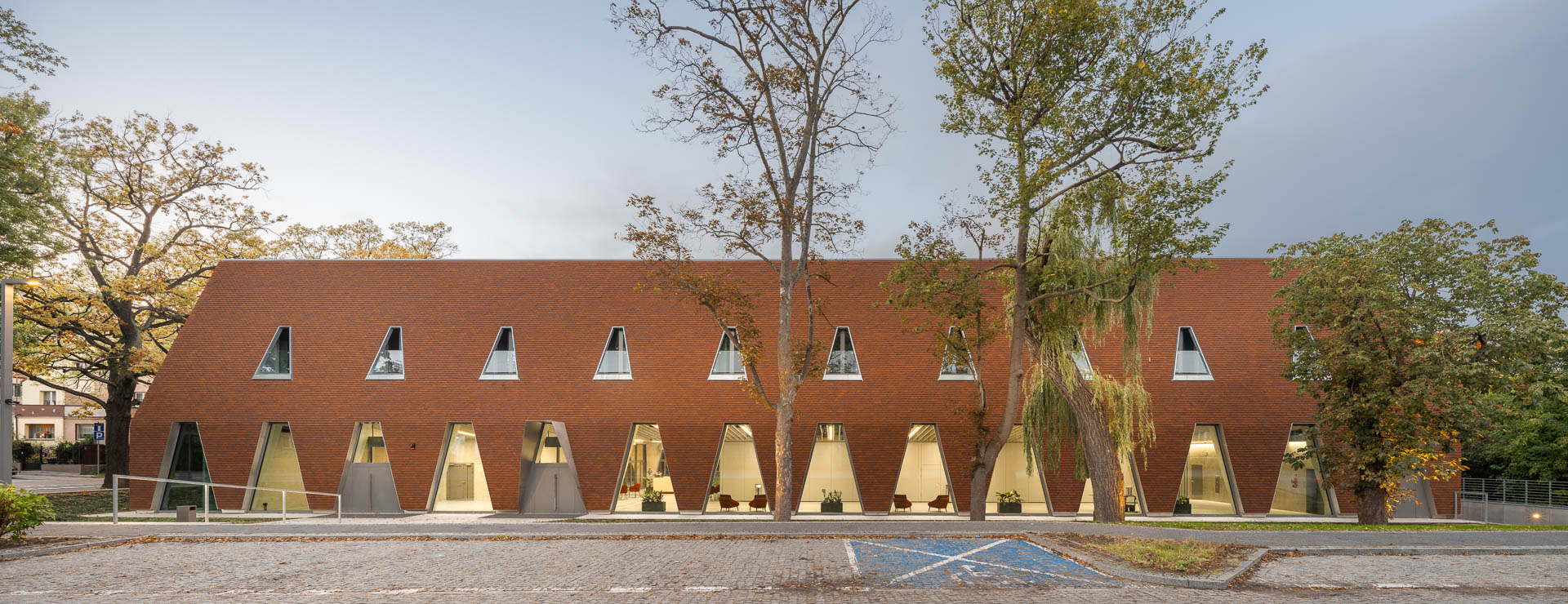
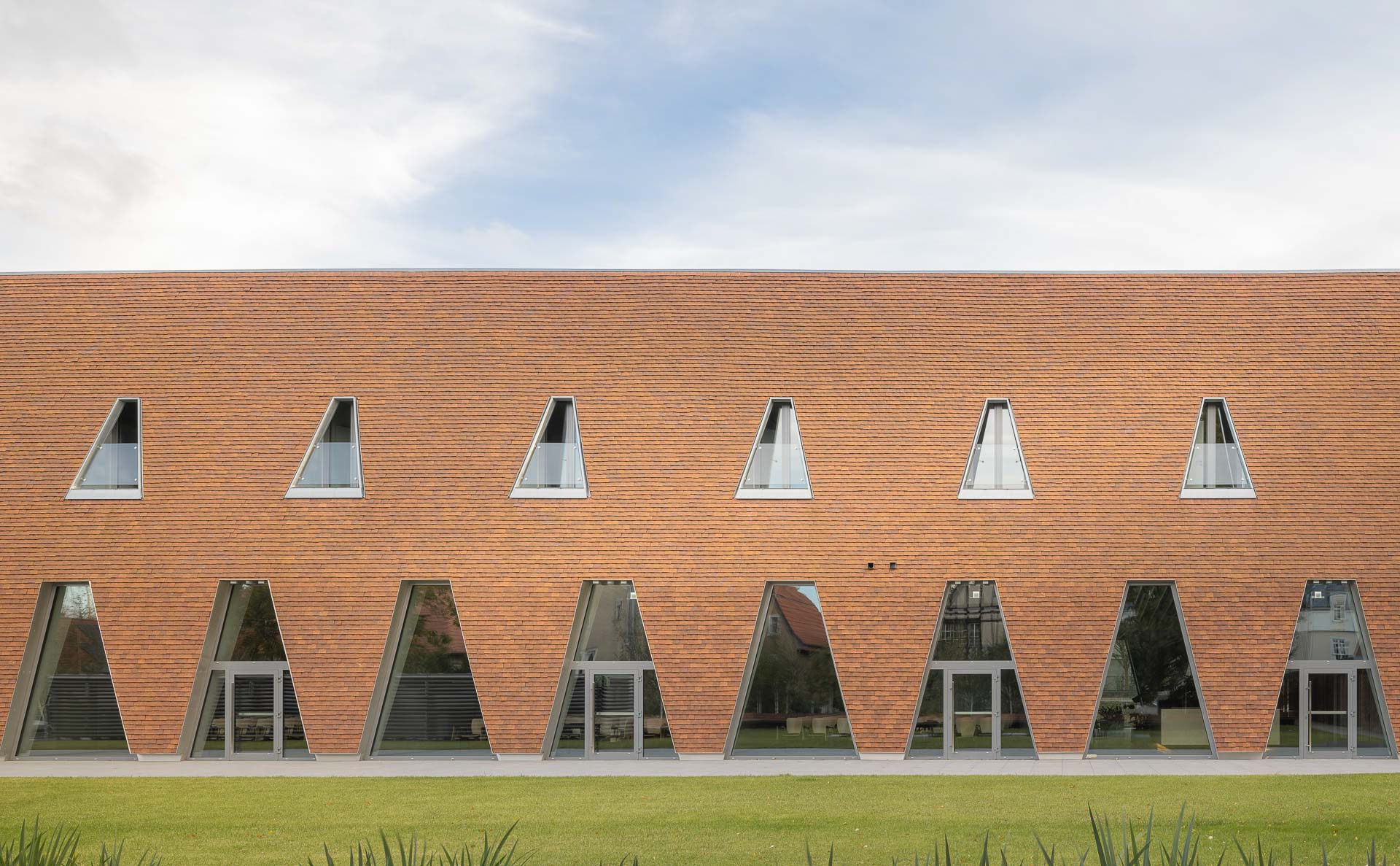
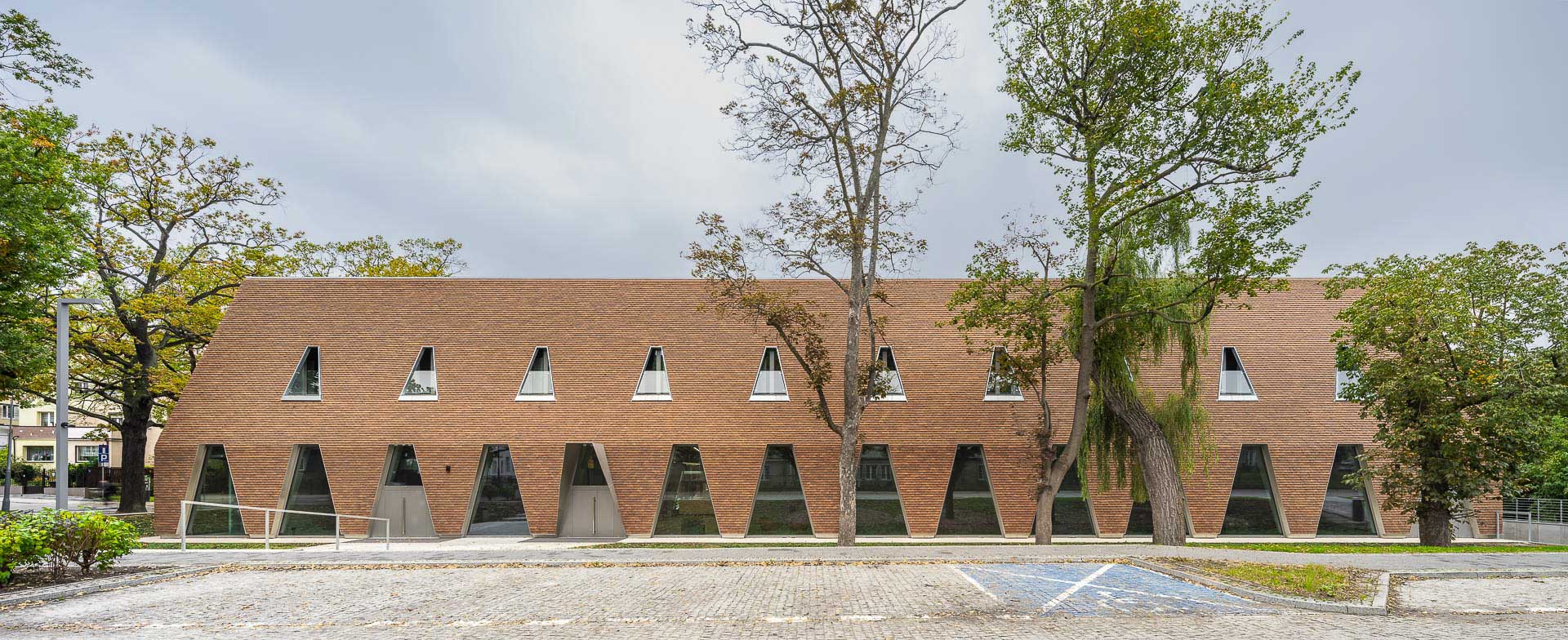
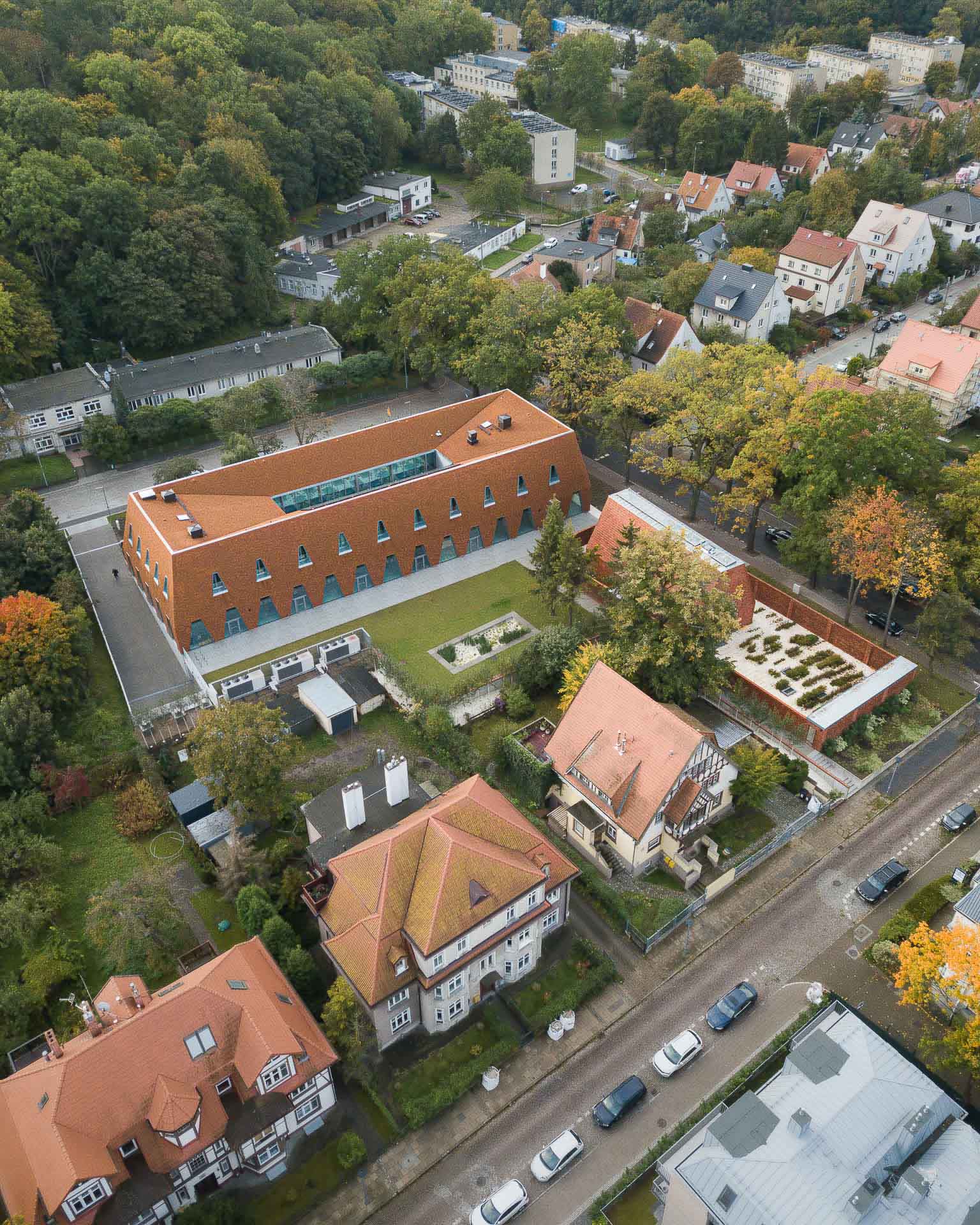
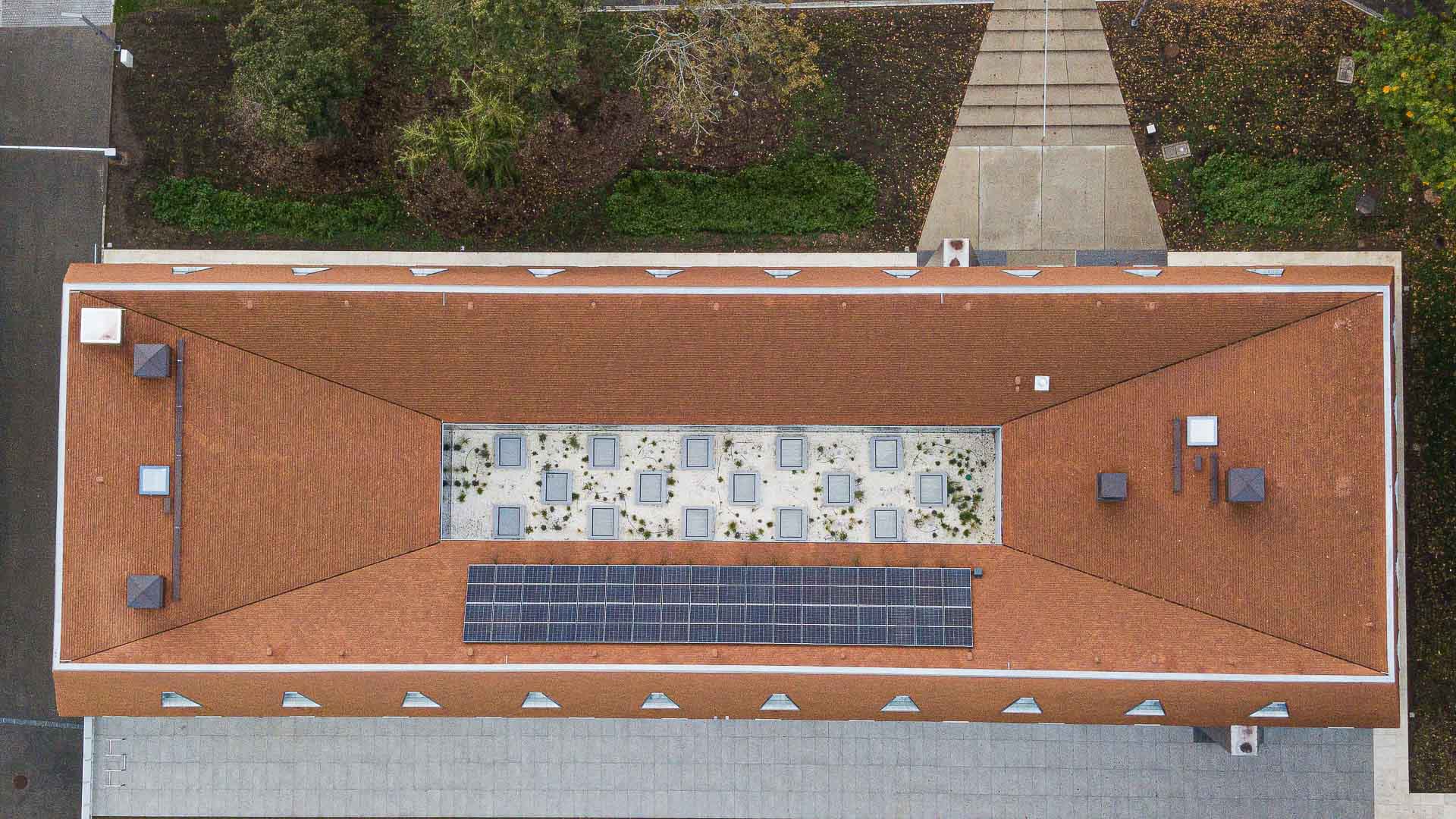
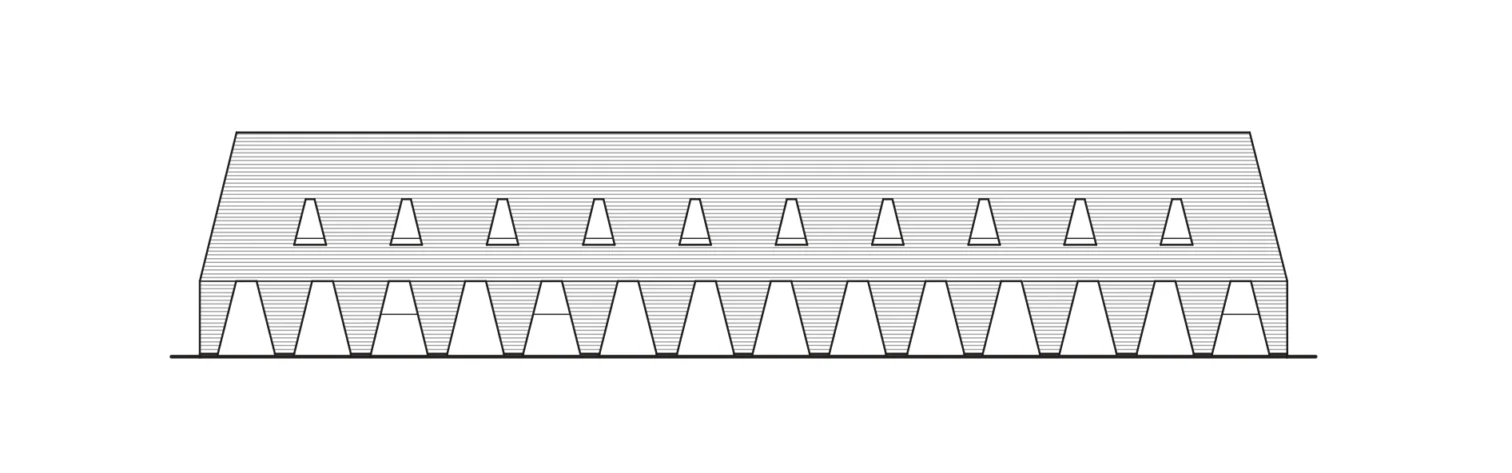
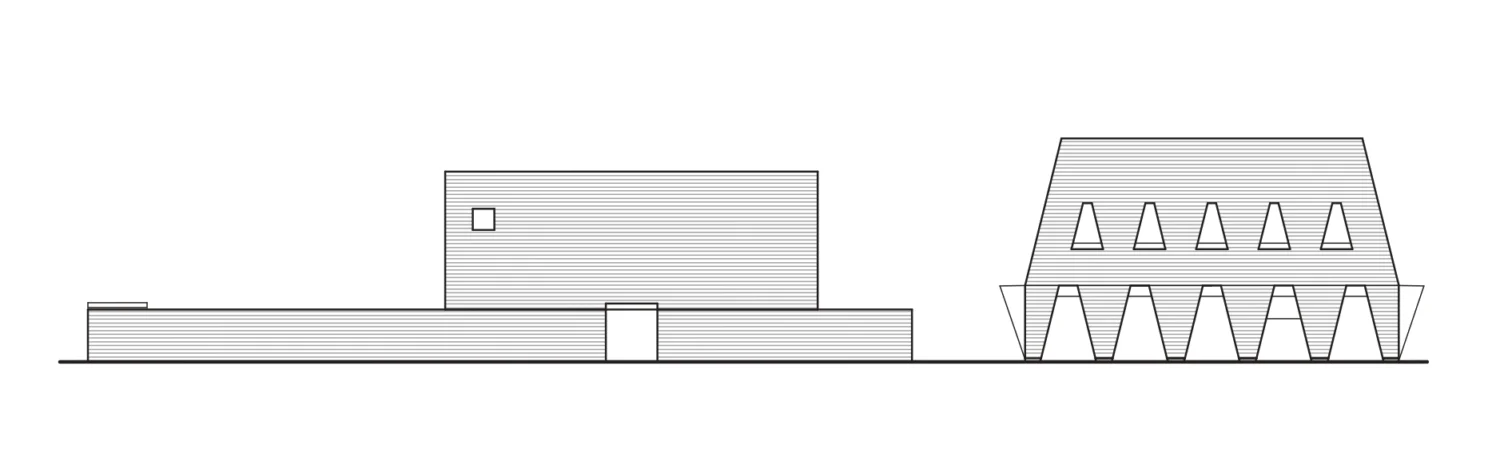
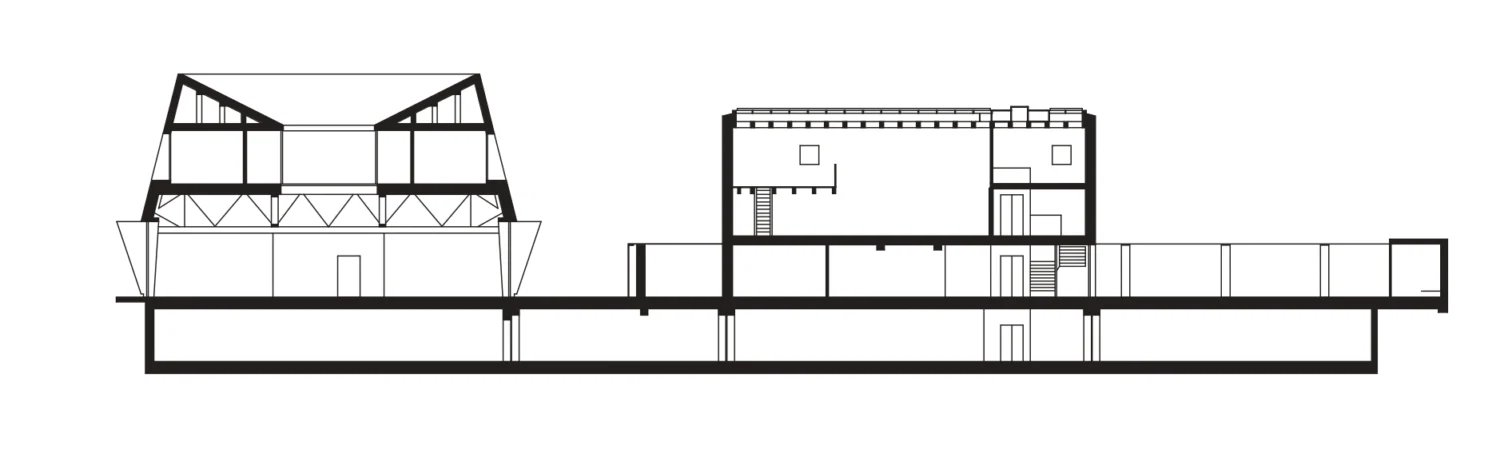
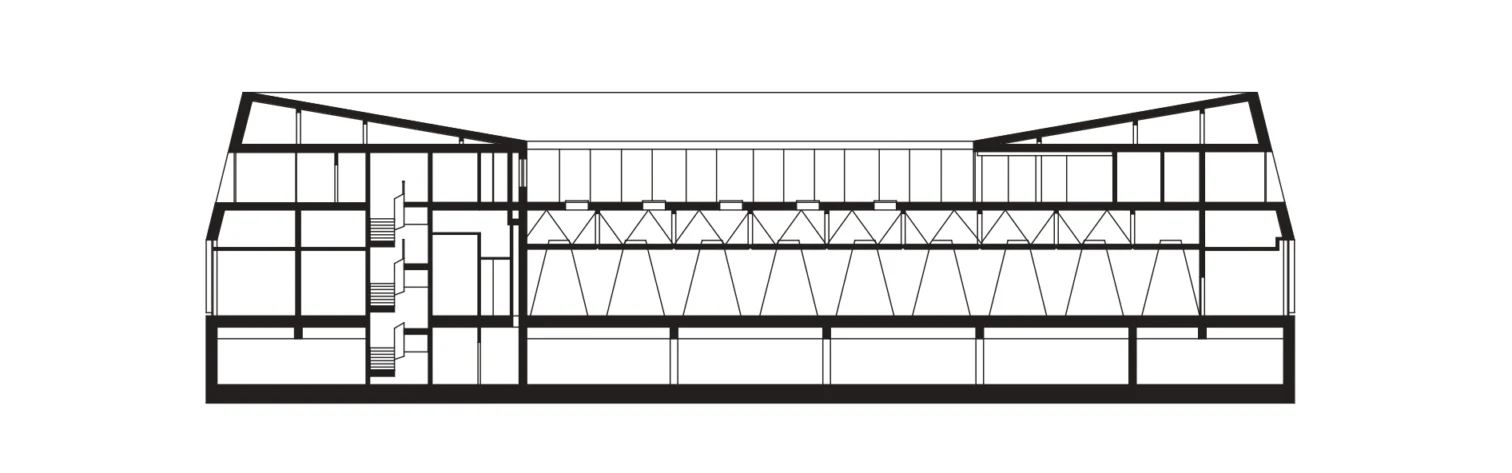
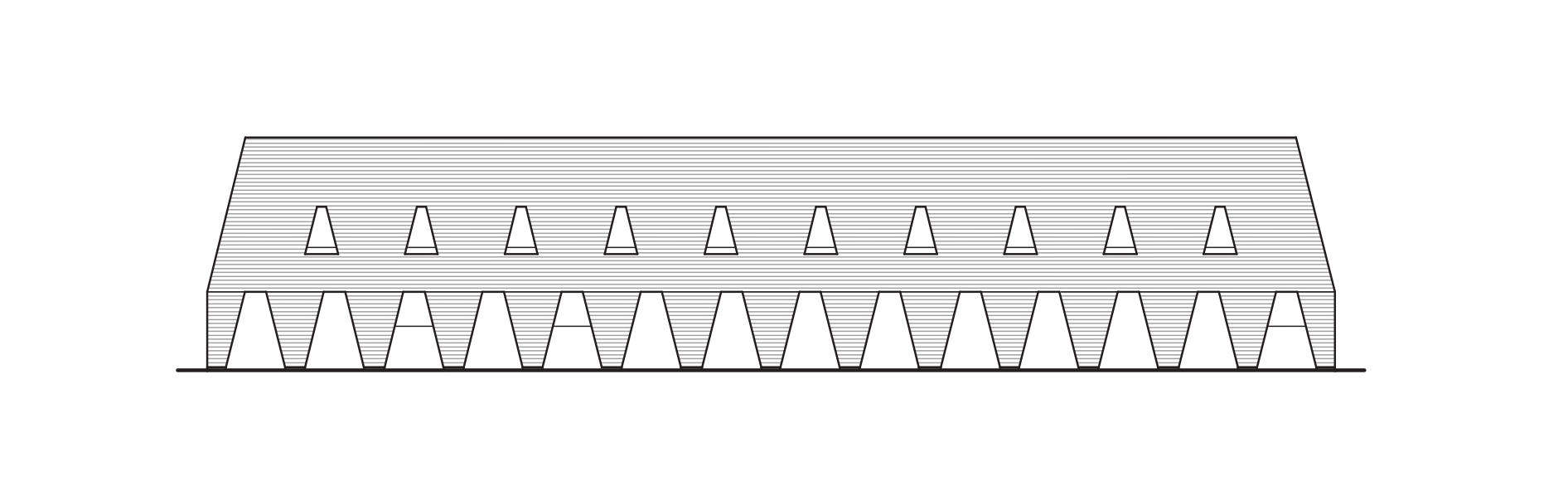
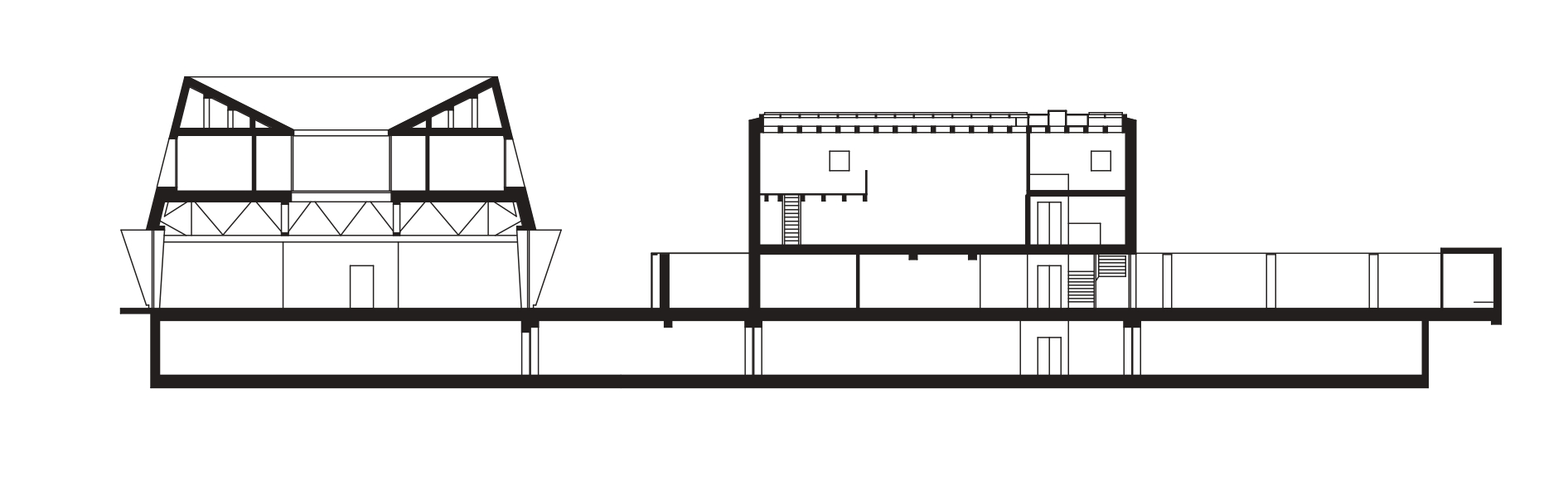
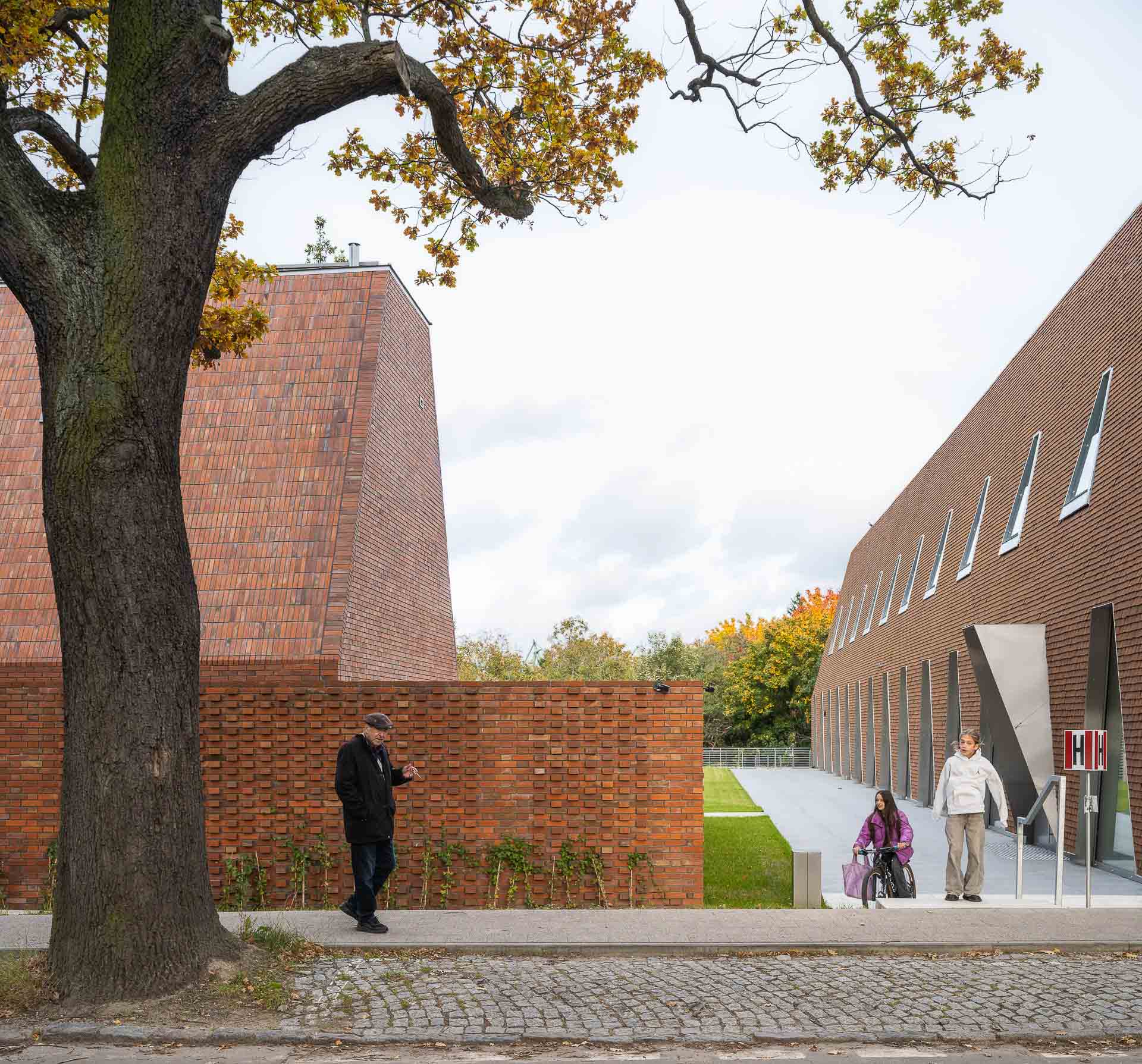
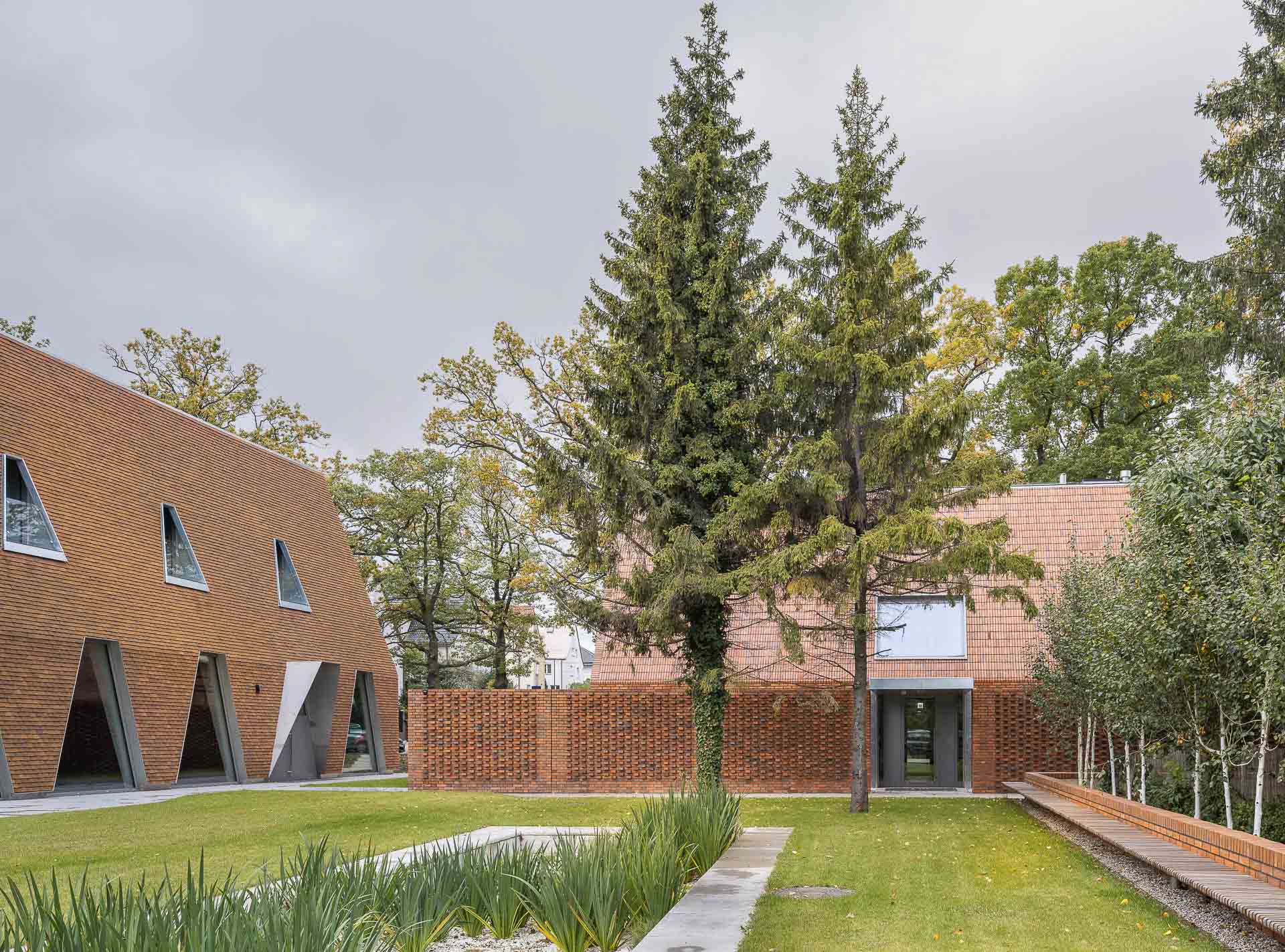
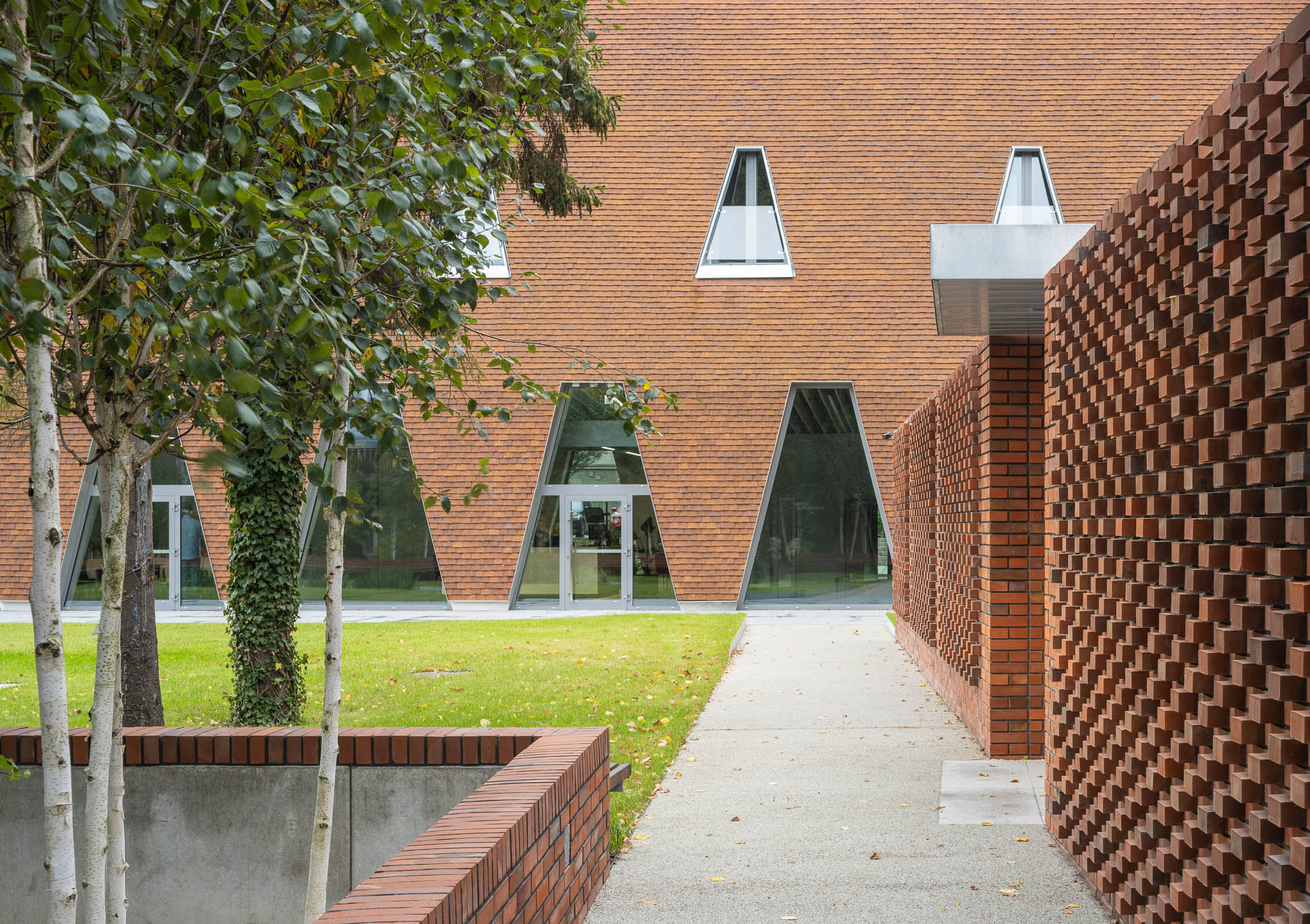
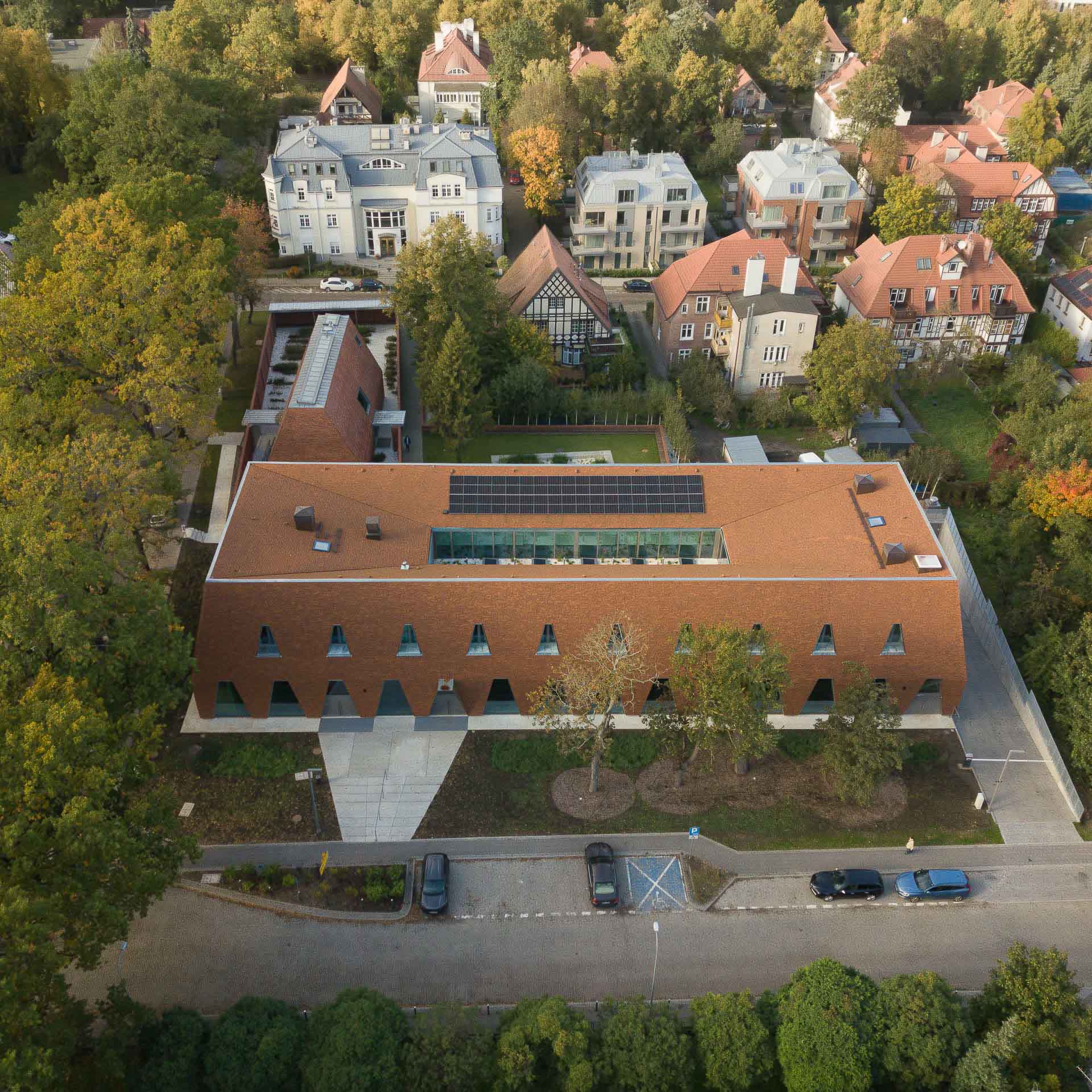
The main volume is a freestanding, axially symmetrical pavilion with a fully glazed, open-plan ground floor and a hotel section above. Flat, traditionally fired ceramic roof tiles flow continuously from the roof onto the walls, which meet the ground only at discrete points — slimming the silhouette and emphasising the lightness of the cantilevered form. The light-and-shadow texture of the horizontal tile bands accentuates the horizontal rhythm and material homogeneity.
life of the building
materials
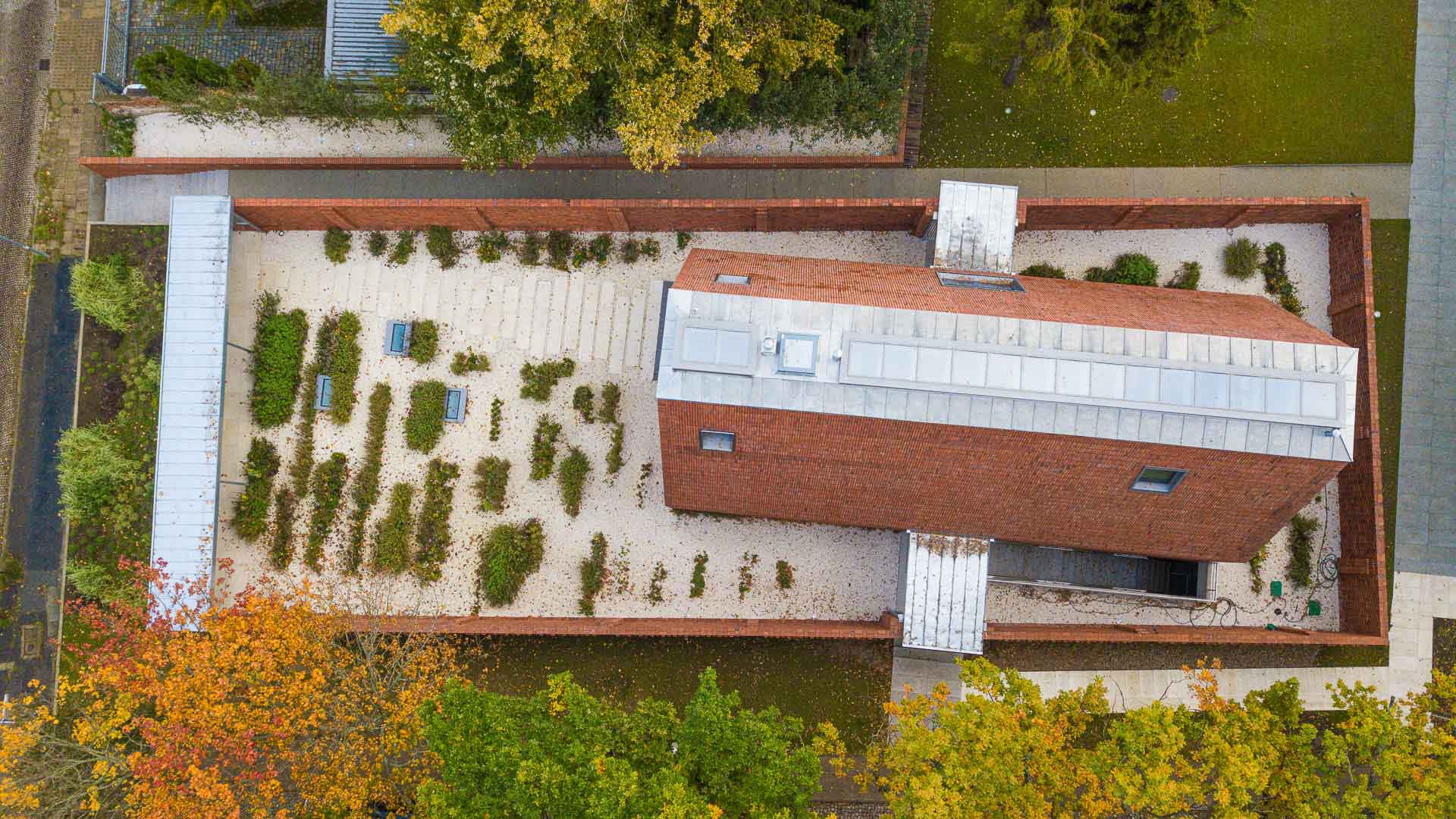
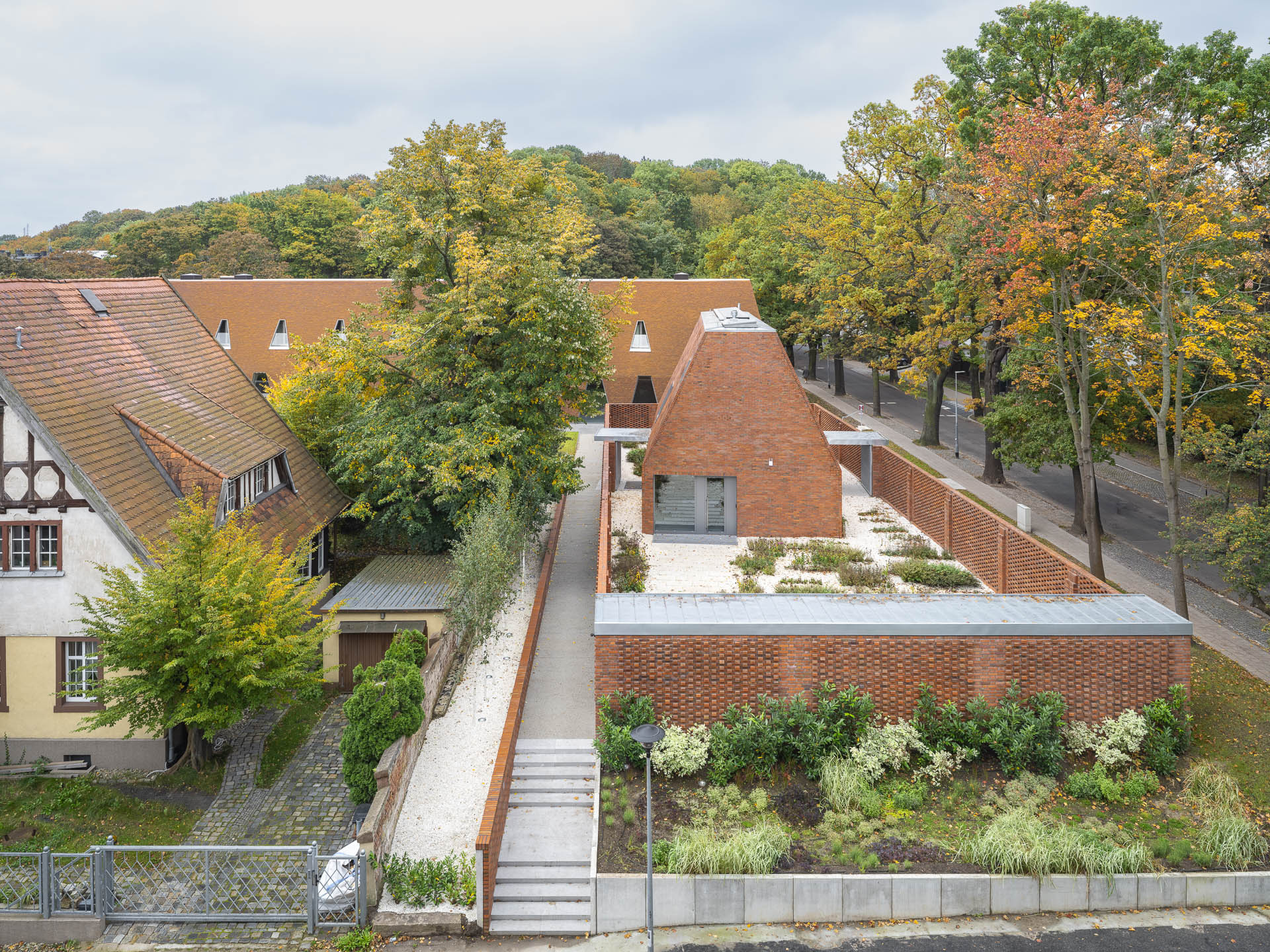
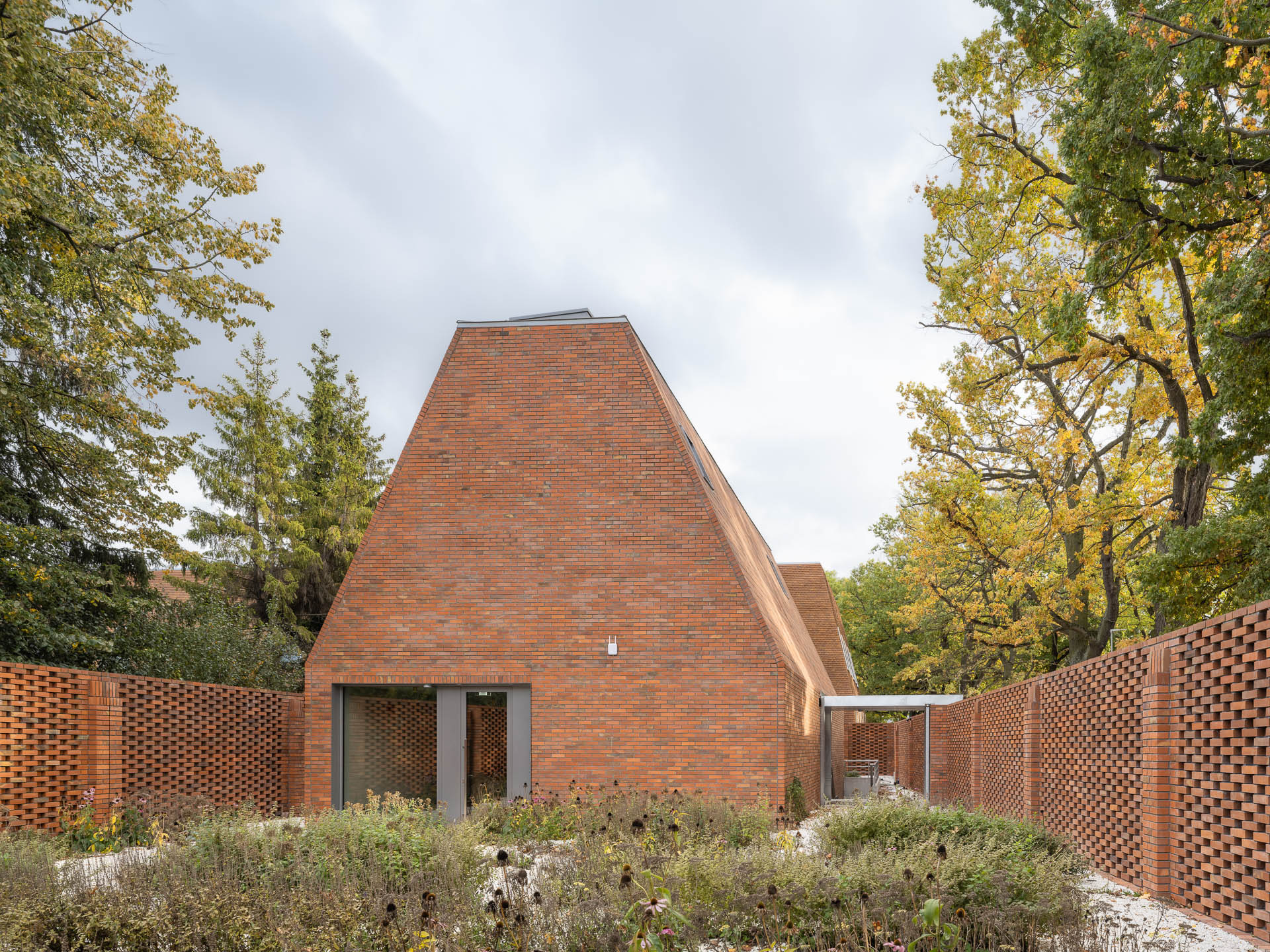
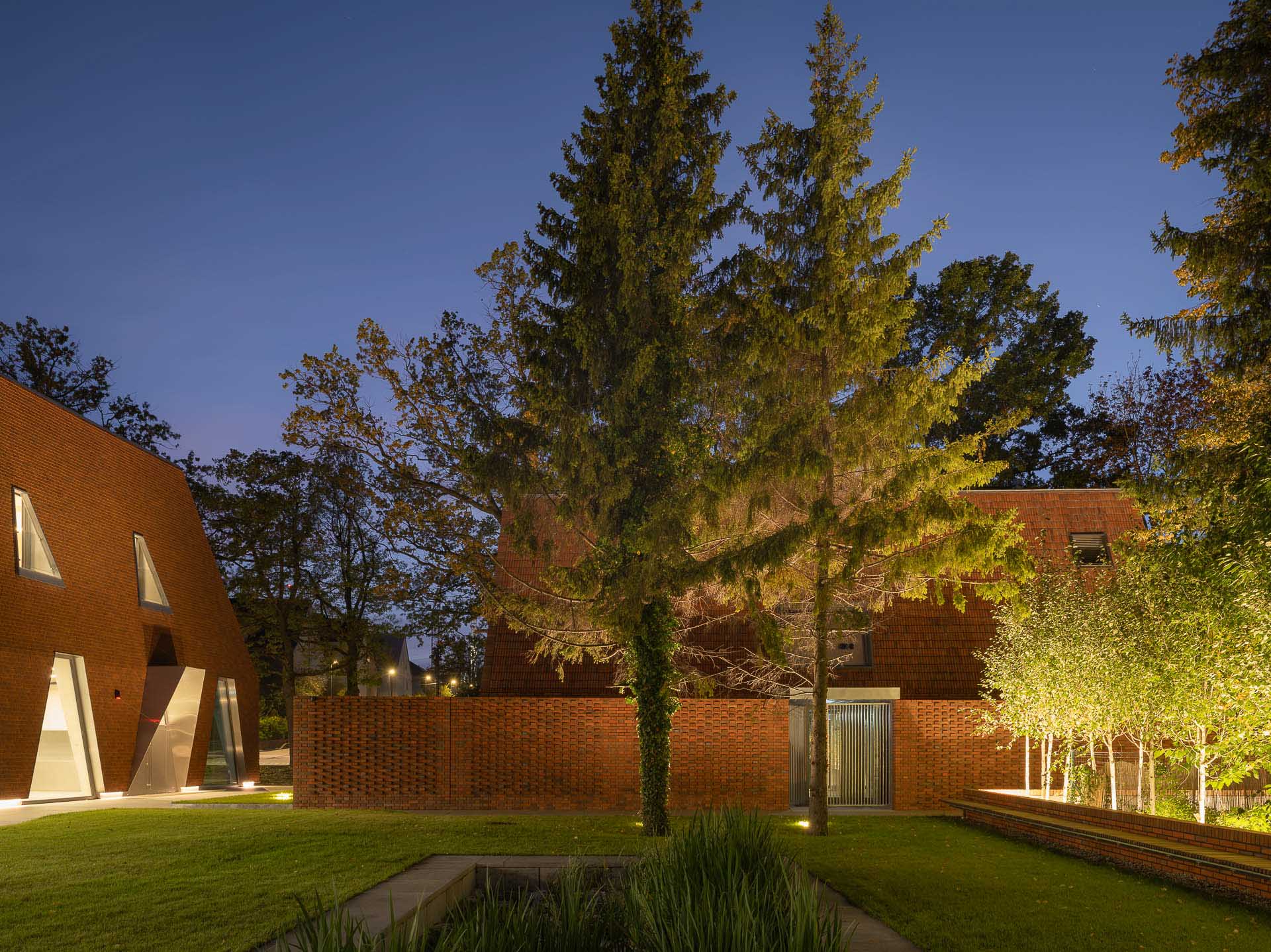
The counterpoint is a smaller pavilion, where brick cladding migrates from the wall onto the roof, forming a compact, monolithic ceramic block framed by a perforated wall — a boundary for the hortus conclusus. The resulting pair of volumes creates a coherent and legible material composition. Gdańsk — lacking local building stone — has traditionally been dominated by brick and ceramic tile. The project consciously develops this local idiom: ceramics become the primary material, deployed in varied textures across both pavilions and the structural garden wall.
closed garden
Structural System
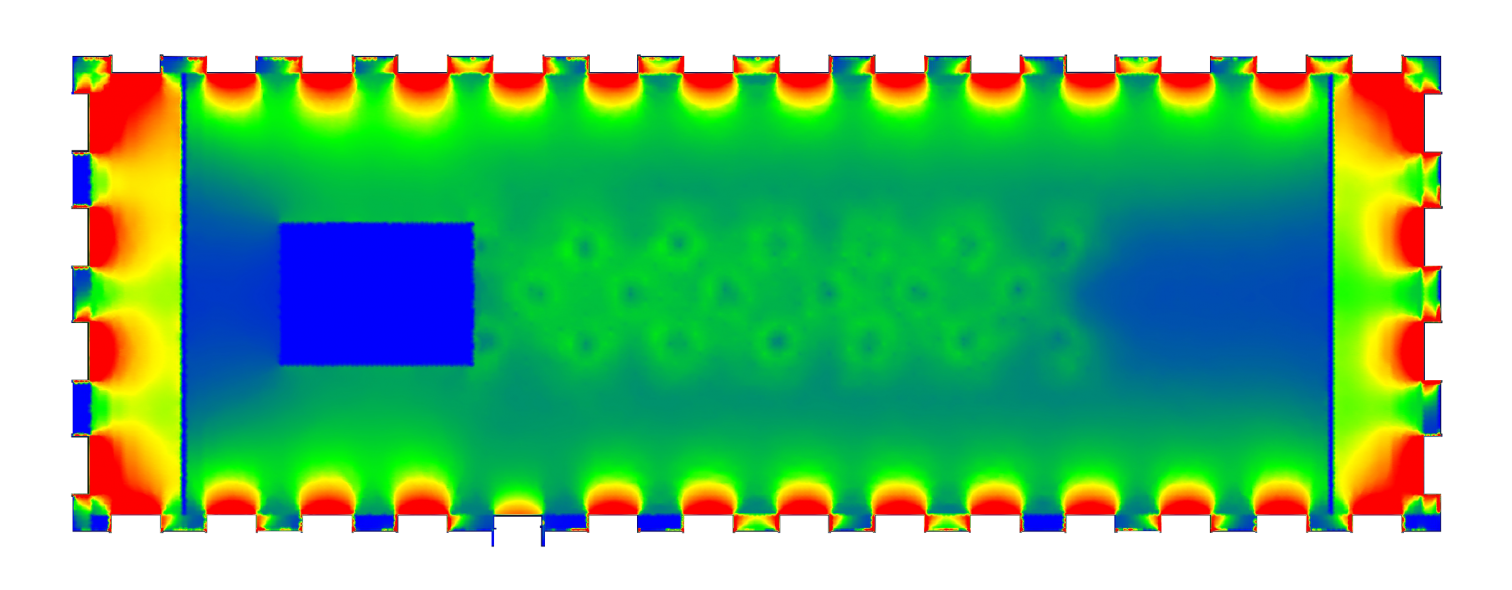
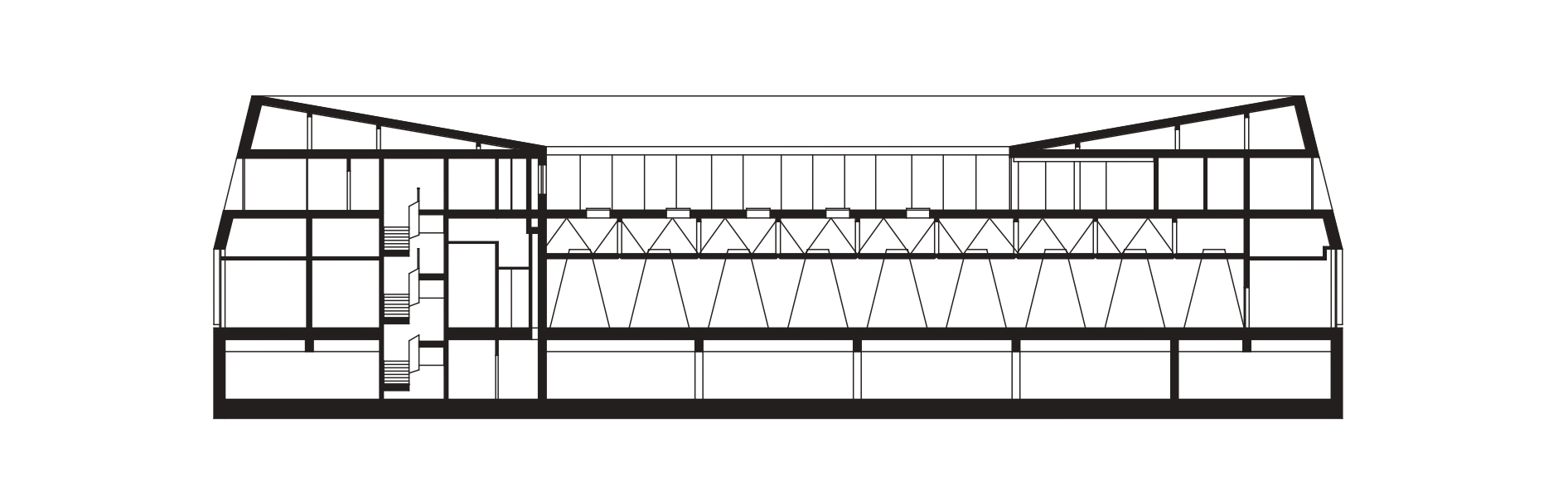
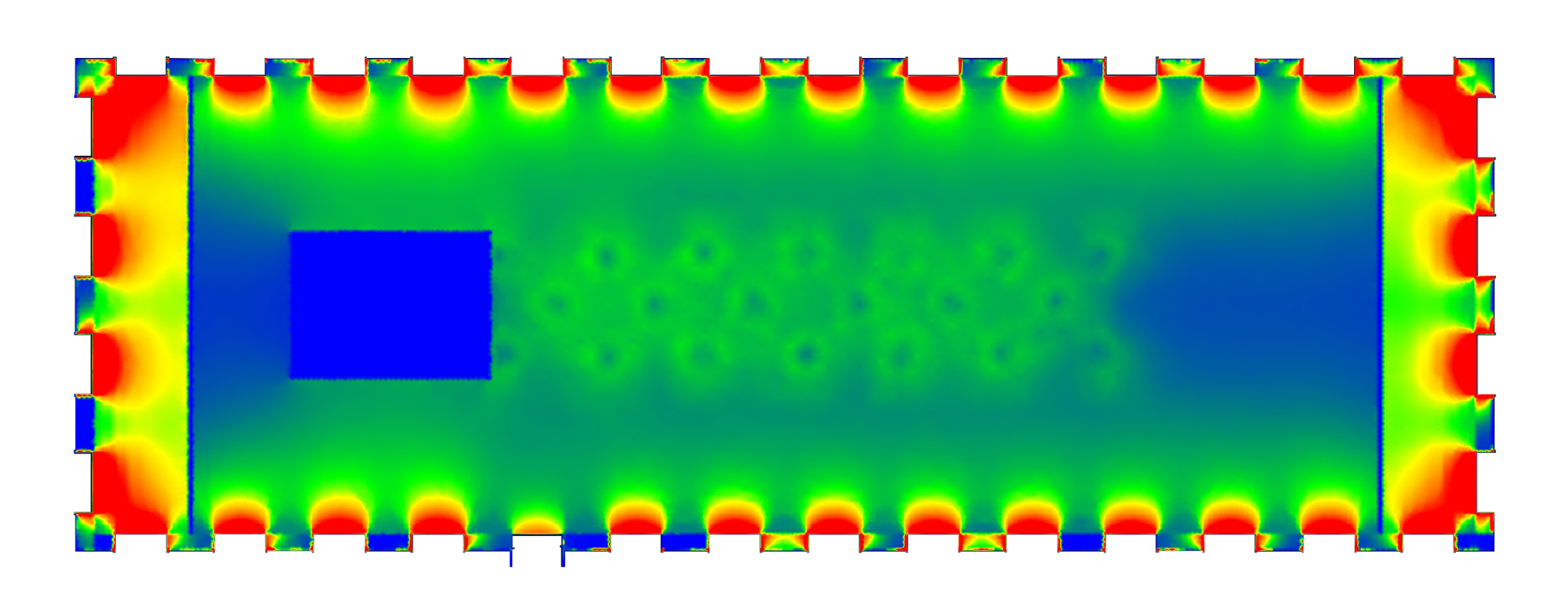
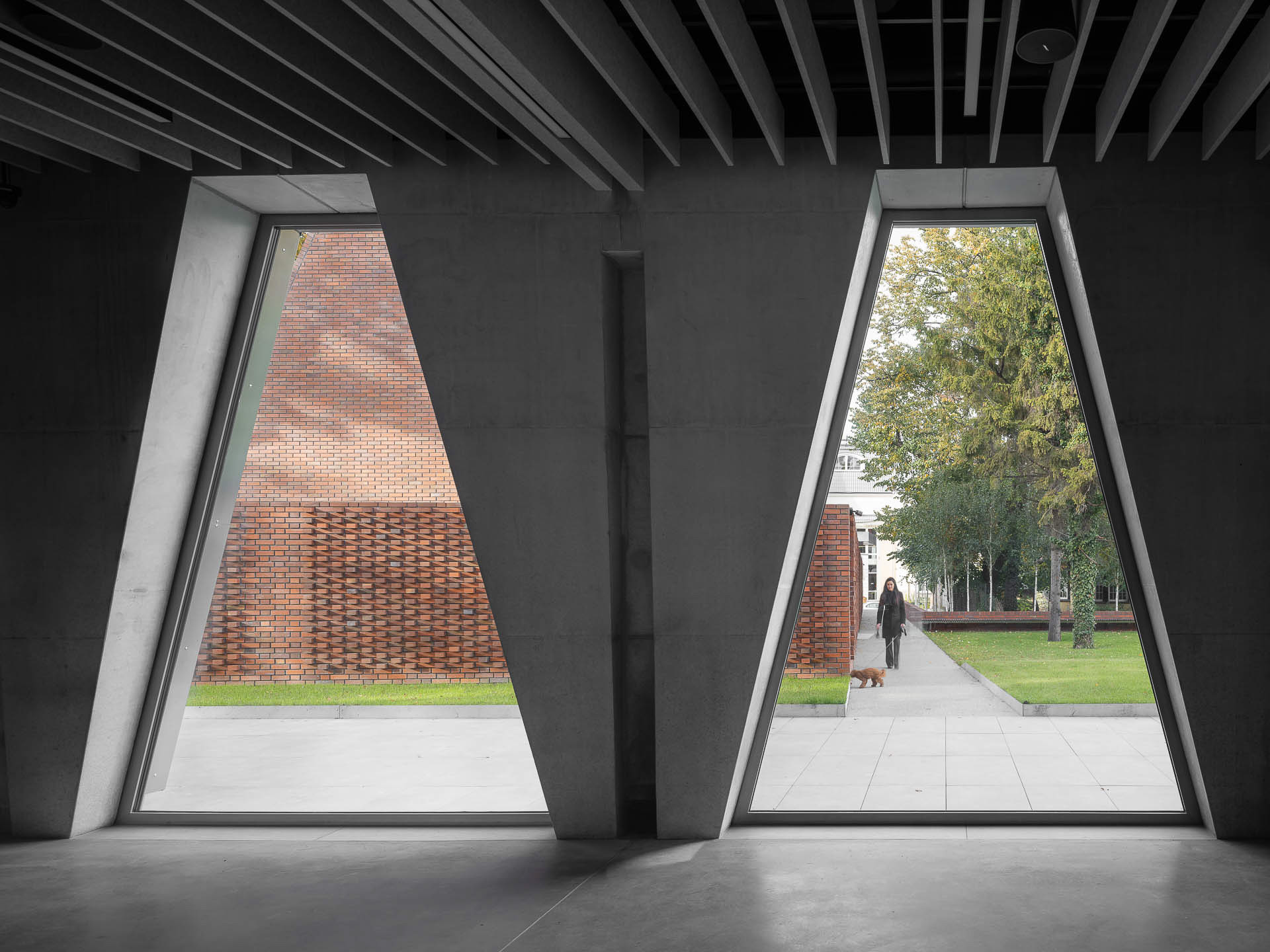
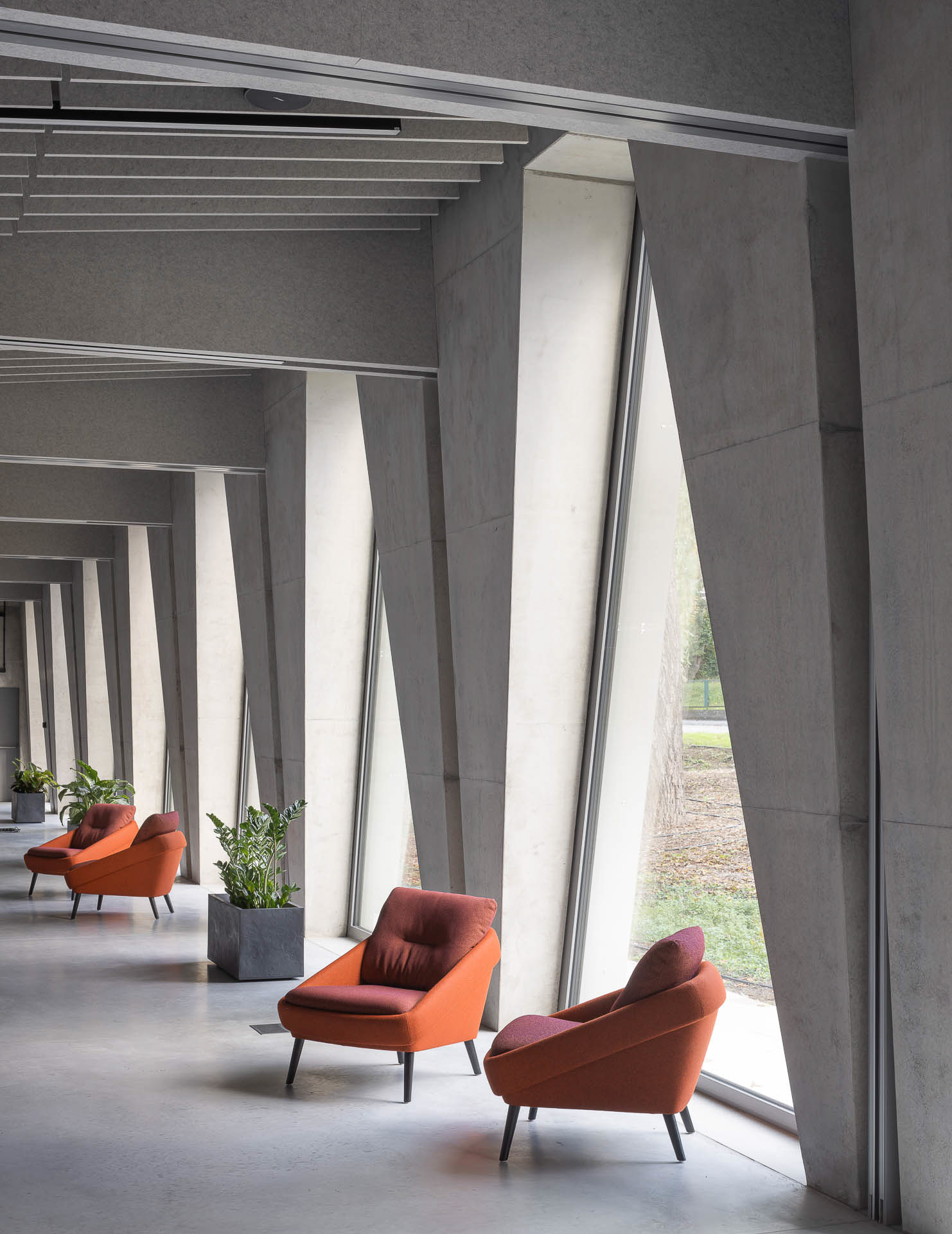
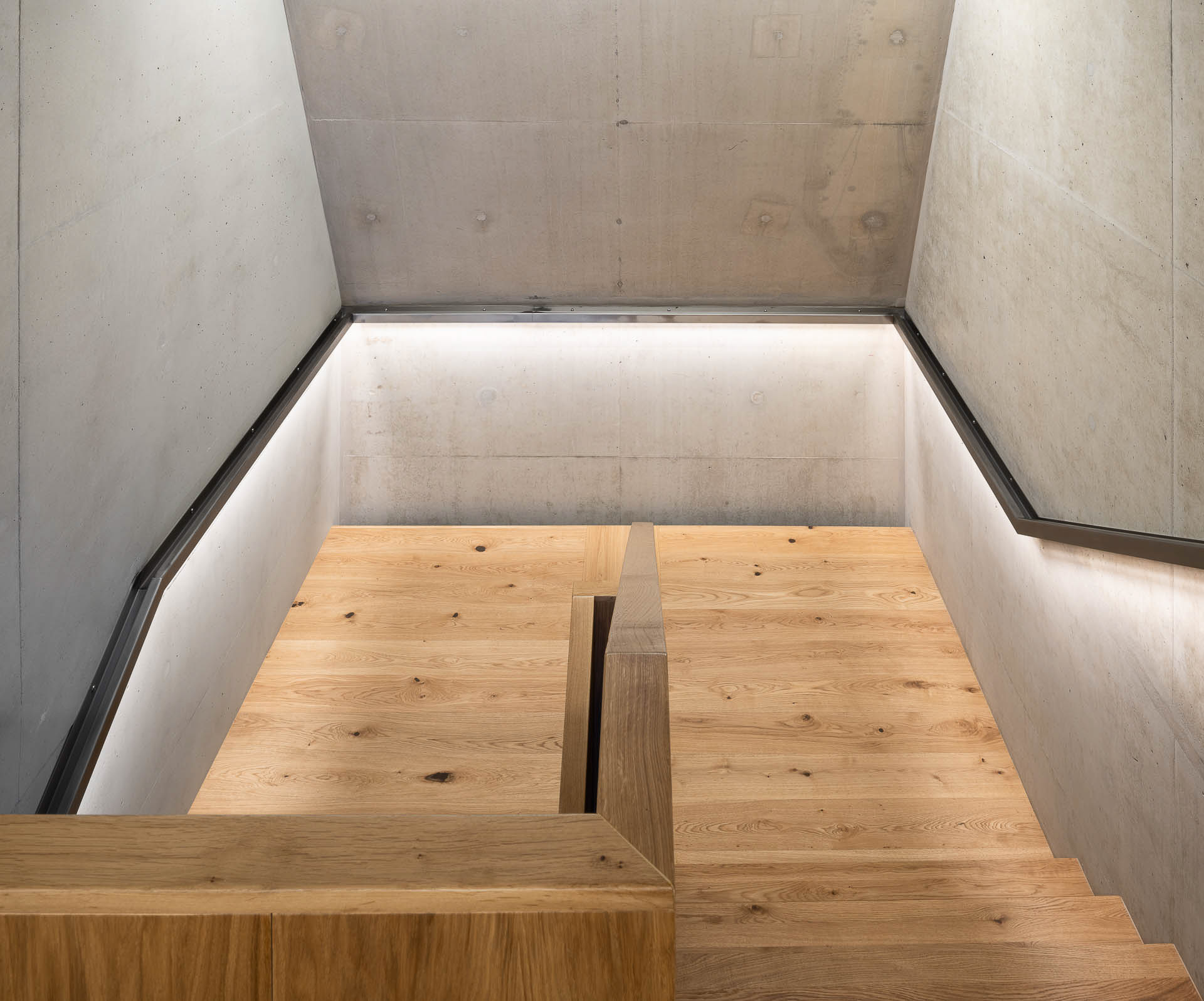
Both buildings are designed as reinforced concrete shells. Above the ground-floor main hall, a composite steel-and-concrete roof structure supported on steel trusses creates a walk-through service void for building services (HVAC, lighting, sound system), allowing easy maintenance and modular distribution of utilities. Below the truss chord, an open ceiling of vertical acoustic panels acts simultaneously as a light diffuser for the skylights located in the atrium at roof level. Ground-floor walls are left as exposed architectural concrete, continued on the floors and terraces. These solutions provide a high degree of adaptability for future changes in fit-out and room configuration.
gate
Site and Landscape – Garden Ensemble
The site composition comprises a sequence of gardens with varying degrees of accessibility: open street-level gardens (a green buffer), a courtyard garden with terraces for the halls and the restaurant, and a hortus conclusus — an intimate gravel-and-rock garden planted with medicinal herbs, evoking the atmosphere of a monastic cloister garden. These spaces connect the buildings and provide a backdrop for the life of the Centre: events, coffee breaks and gatherings of the medical community. The generous share of greenery reflects the character of the Aniołki district, one of Gdańsk’s most distinctive neighbourhoods.
Ground Floor – Training and Restaurant Zone
The entire ground floor is conceived as a column-free, flexibly subdivided space combining training halls, a restaurant and a foyer. Terraces open directly onto the gardens, encouraging participant integration and informal post-session discussions.
entrance
Hotel Section – Atrium with Ornamental Grasses
The corridors leading to the hotel rooms surround an interior atrium planted with ornamental grasses that change appearance throughout the seasons. Each room has a small balcony; shared areas and access control allow the hotel zone to operate independently beyond event hours.
intriors
Functional Change Relative to the Competition Entry
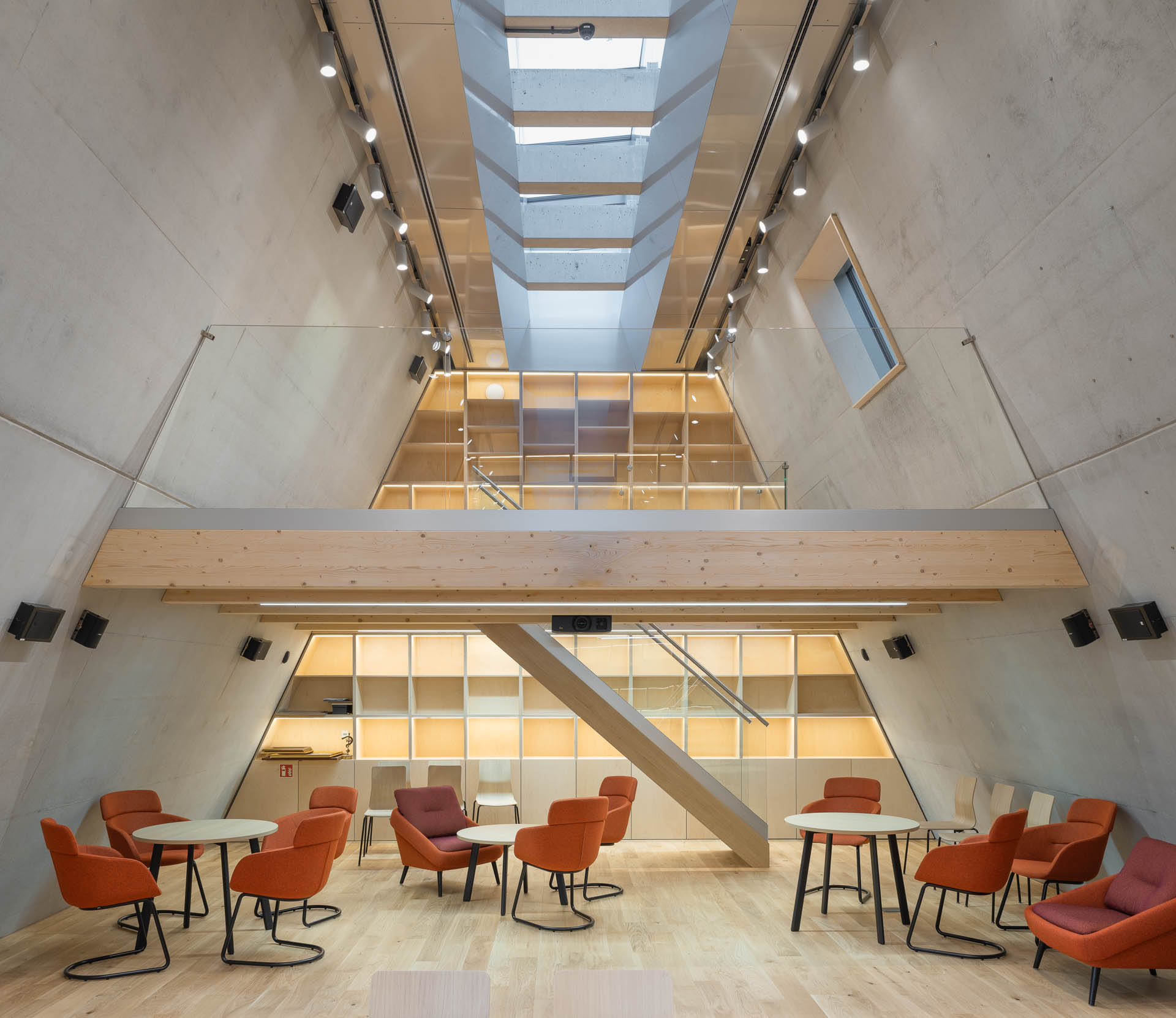
During construction, the fitness area was relocated entirely to the basement level with covered connections from the car park and the hotel. The freed floor of the smaller pavilion was dedicated to the Areopagus — a physicians’ club: a place for meetings and open exchange of ideas among training participants and the local medical community. The change enriched the Centre’s programme while preserving all the fundamental architectural principles of the original concept: the dual composition of the volumes, the logic of ceramic cladding and the garden layout.
staircases
bird's eye view
elevation at night