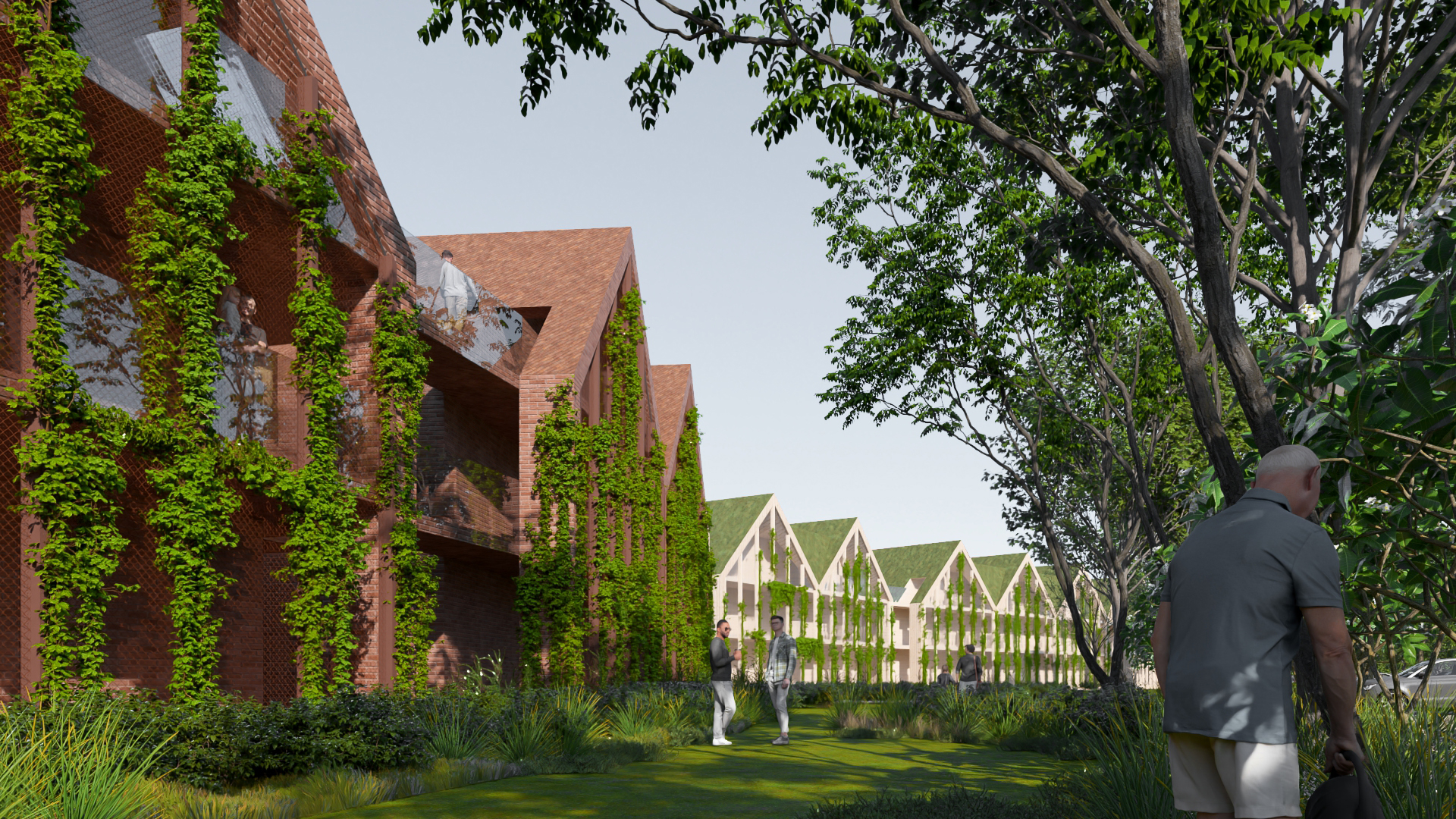
Multi-family housing Nowe Mostki / 2024
view
structure
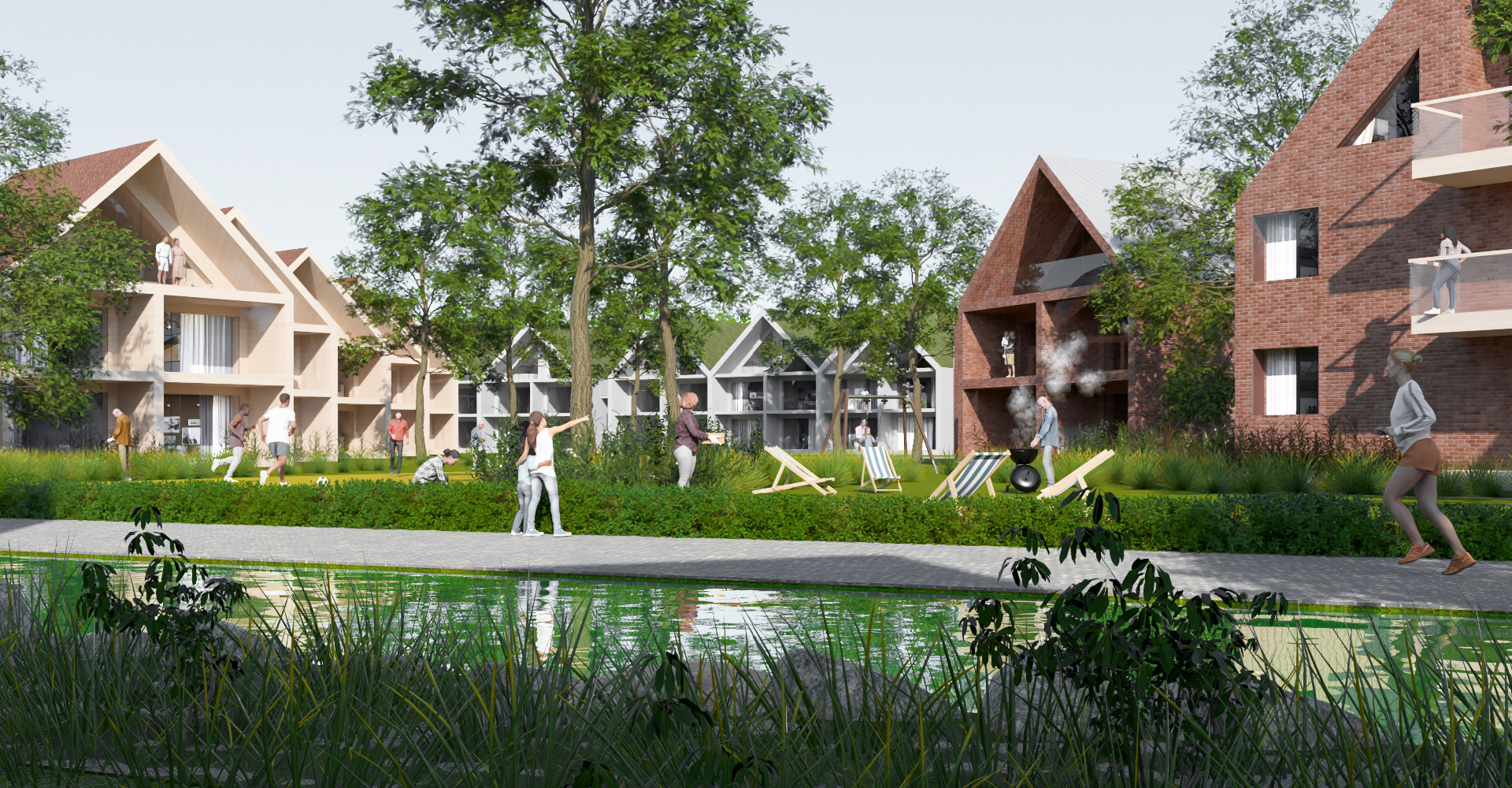
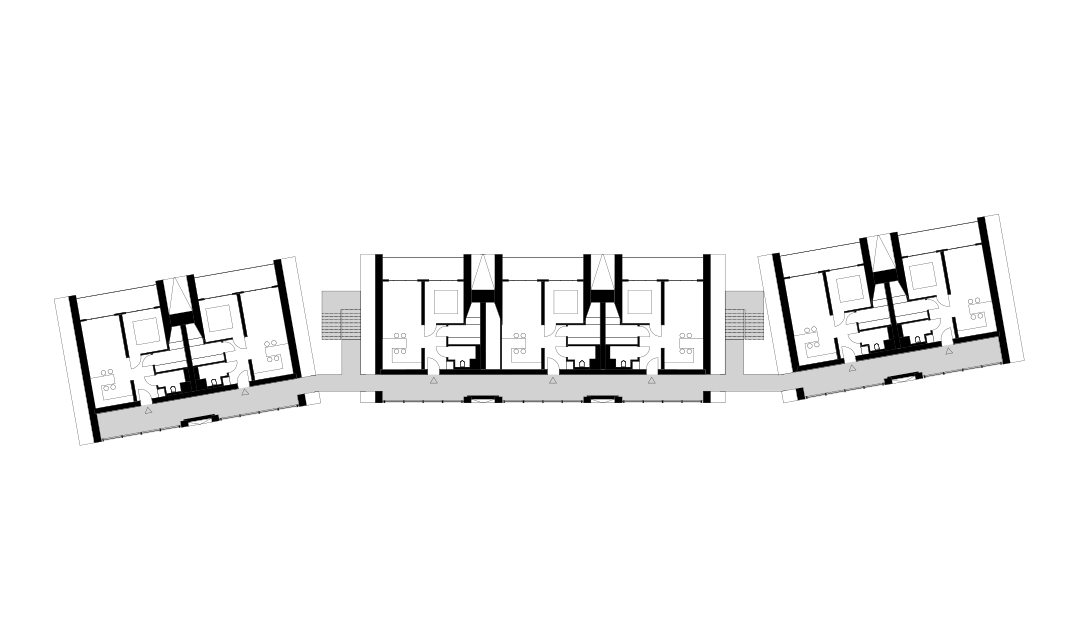
The structural layout is based on external, single-layer masonry walls made of ceramic blocks, as well as walls made of Silka E-A blocks between apartments, which meet acoustic protection requirements. For the floor structures, prefabricated reinforced concrete slabs of the Smart type are proposed.
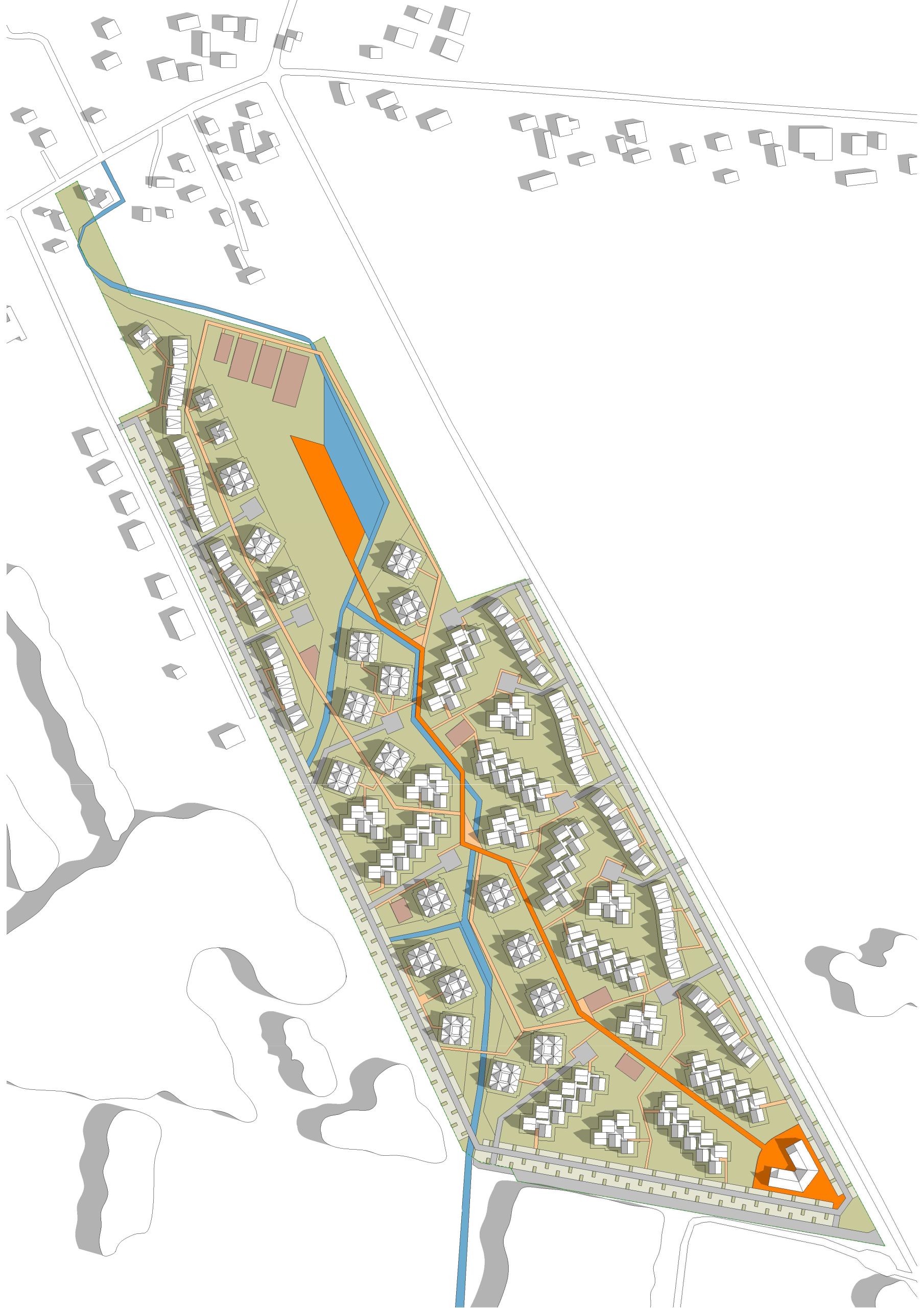
masterplan
Single-layer ceramic walls
External single-layer ceramic walls covered with traditional cement-lime plaster meet the thermal insulation requirements of buildings and, at the same time, by allowing water vapor to diffuse to the outside, prevent moisture accumulation. The alkaline reaction of the mortar limits the growth of fungi and mold. Traditional plaster is several times more durable than the thin-layer plaster used in the so-called “light-wet” method applied in most residential buildings currently constructed in Poland. Traditional plaster “ages well” and, with proper maintenance, can last over one hundred years. Cost analyses carried out in the design office indicate that, contrary to common belief, such a wall is less expensive to construct than a “light-wet” wall, although it requires careful workmanship. Single-layer ceramic walls allow the use of various types of finishes, e.g., ceramic tiles, which, when applied over polystyrene, have limited durability. In addition to its undeniable functional advantages, the traditional construction method can also serve as a marketing point in promotional campaigns when selling apartments, appealing to the tradition of solid, durable construction.
Film
Internal load-bearing and acoustic walls
For these walls, Silka E-A is proposed as the thinnest wall available on the market that meets the acoustic insulation requirements between apartments. Thanks to its dense structure, this material has good thermal and moisture storage capacity, thereby improving the indoor microclimate.
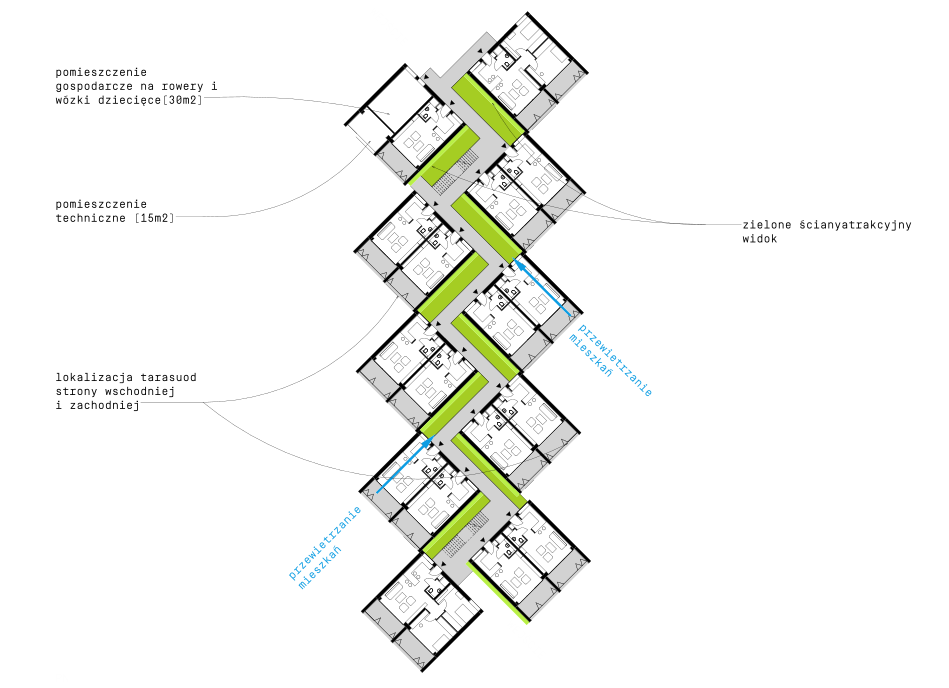
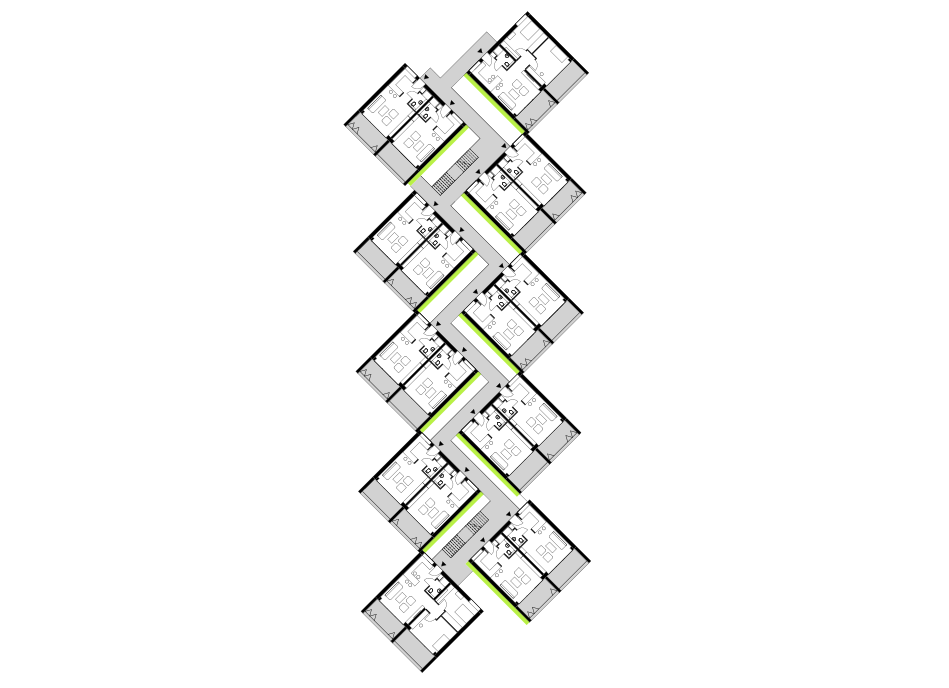
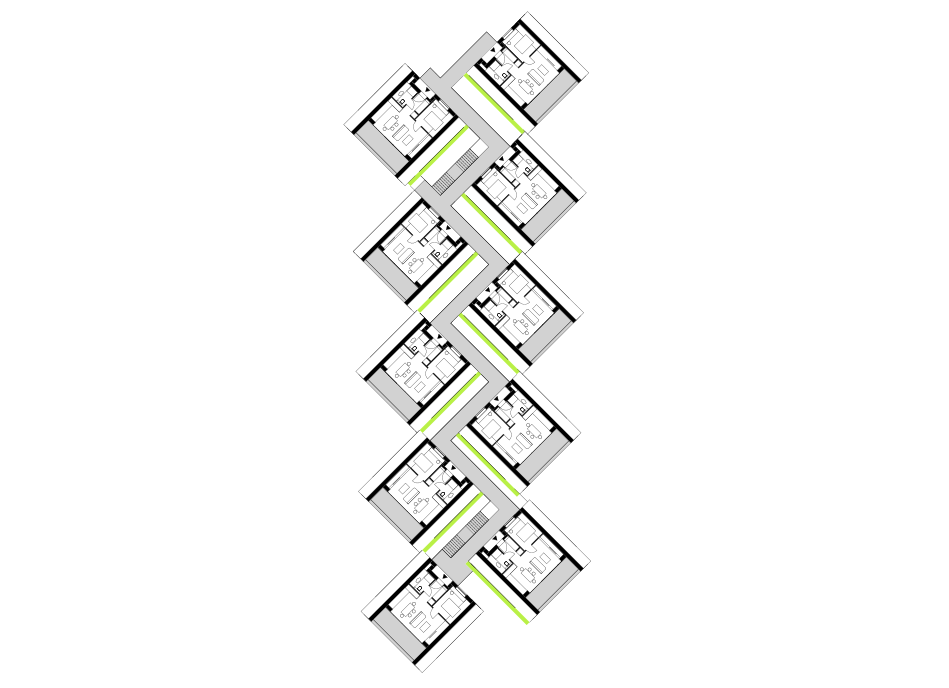
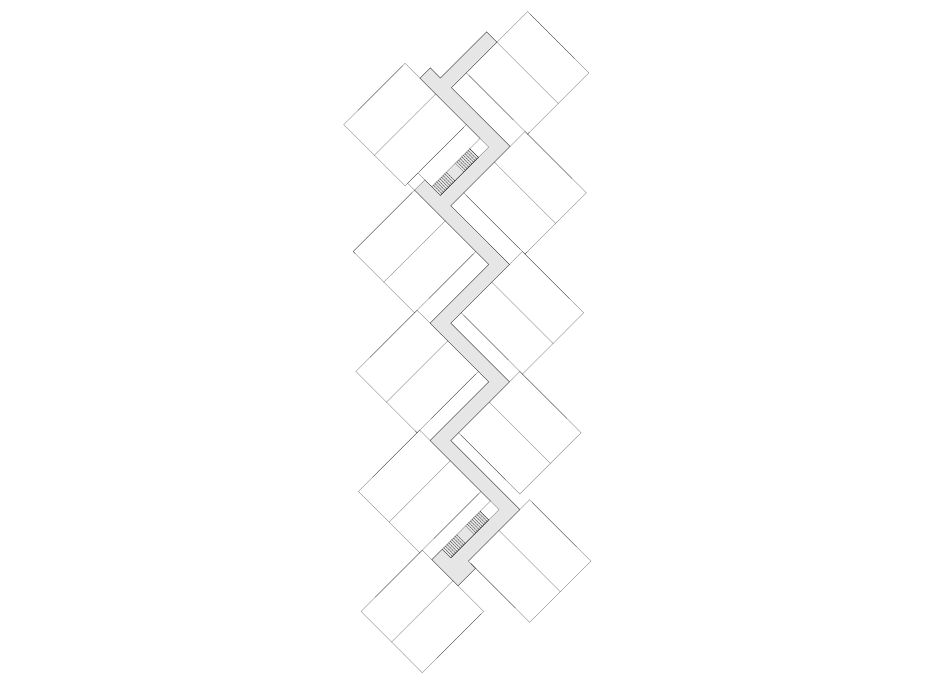
Smart-type floor slabs
For small spans between supports, the Smart-type floor slab appears to be the most suitable, as it can be installed directly from the delivery truck. This system eliminates the need for construction cranes, reducing costs and speeding up the construction process.
The developer-ready condition should assume leaving the ceilings unplastered, as exposed concrete can be considered an added value in many contemporary interiors.
view
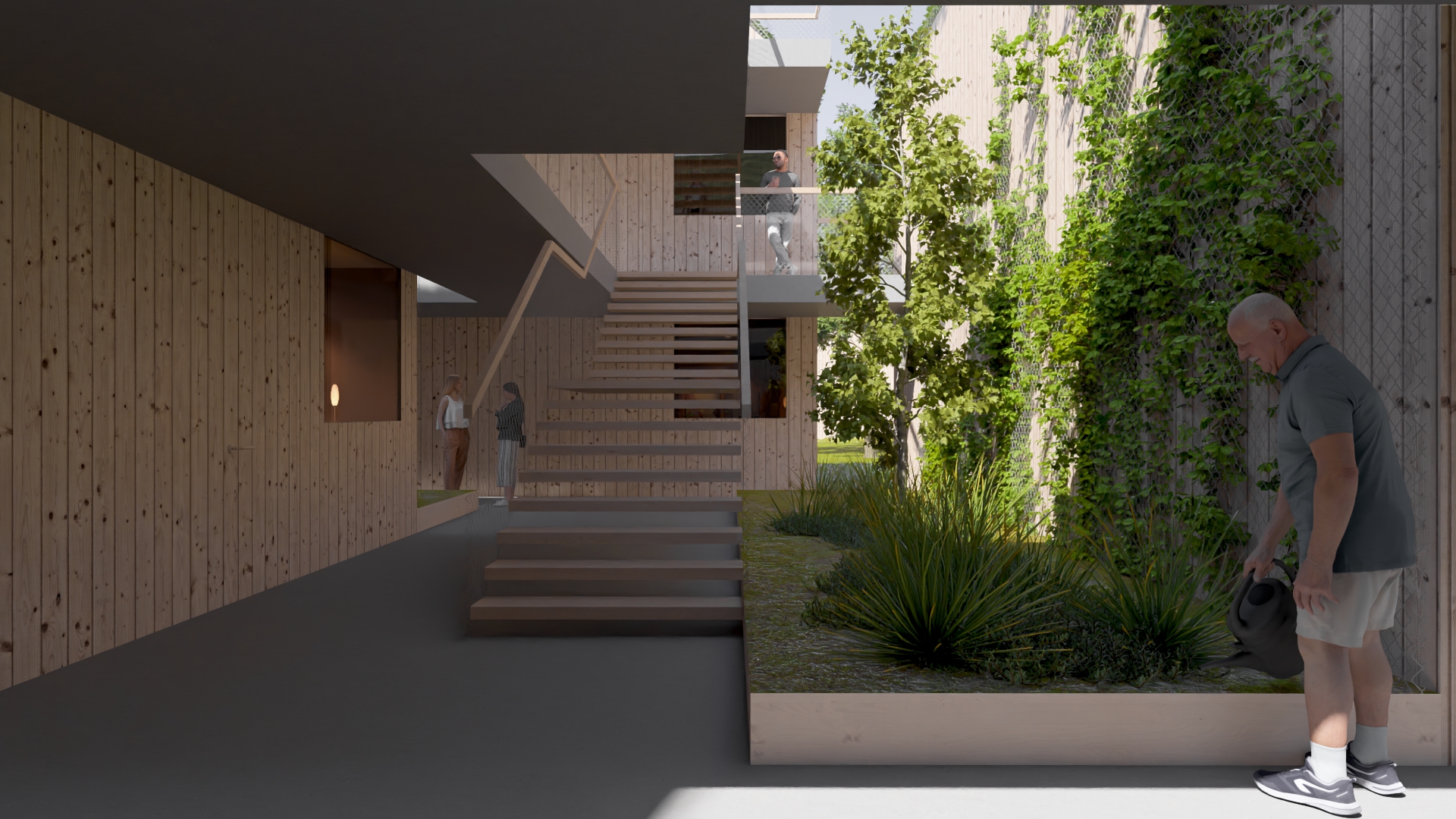
Ventilation - issues
The rise in energy costs and sustainable development plans are already influencing the decisions of informed investors, who certify construction projects and have detailed ESG strategies aimed at decarbonization, biodiversity, and a circular economy. With the use of modern building partitions providing high thermal insulation, energy losses occur primarily through natural ventilation. Therefore, even in small apartments, energy recovery systems are increasingly being implemented. It is worth noting that, although the energy gains per apartment may be small, with a projected total of over 1,300 units in the estate, such losses would be significant.
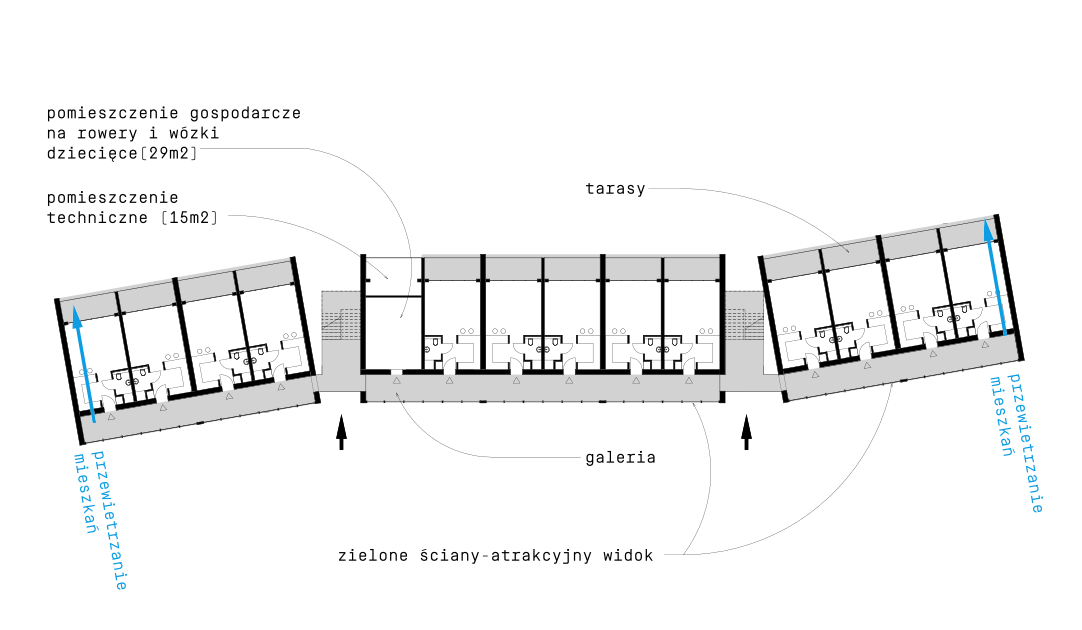
Traditional ventilation units with heat recovery cannot be applied due to the lack of space for ductwork and the practical impossibility of measuring energy consumption for each individual apartment. This issue is particularly relevant when some apartments are permanently occupied while others are used only occasionally.
view
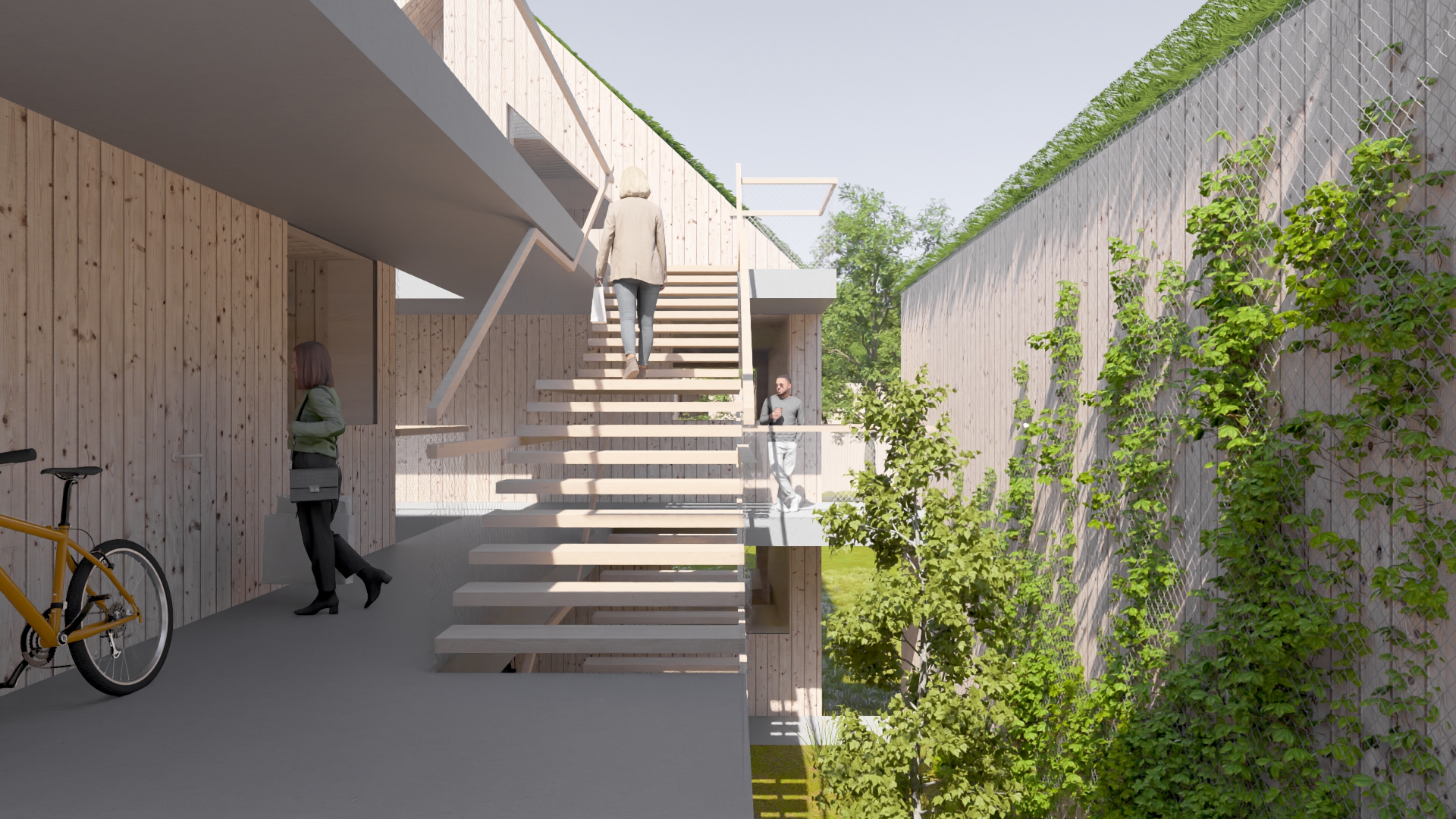
ventilation - solution
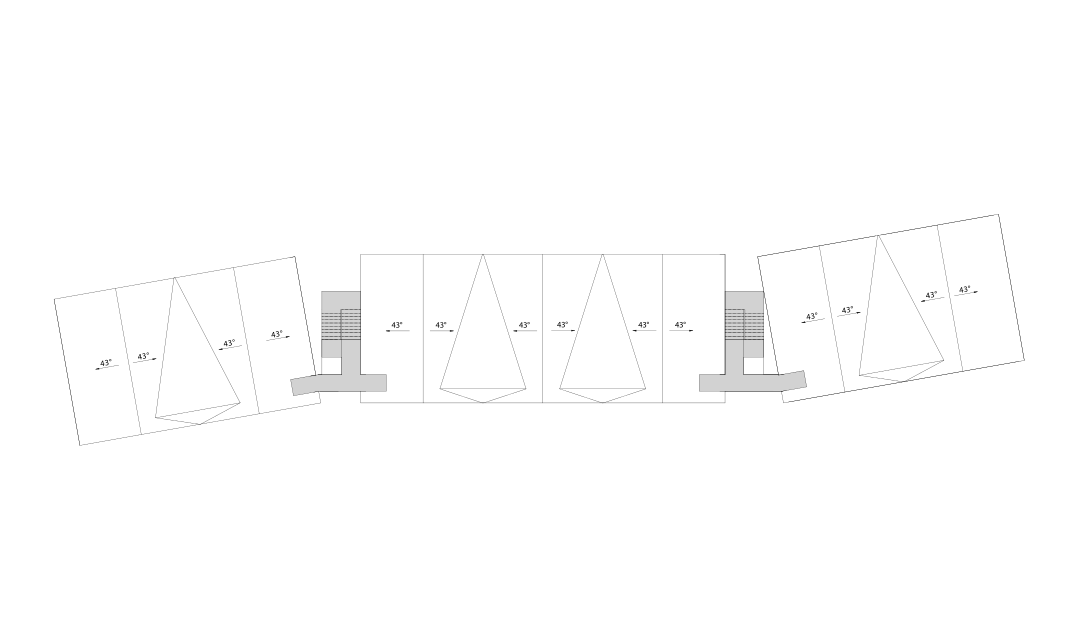
The solution is decentralized ventilation systems, such as the AIRMASTER type. Compared to centralized ventilation systems, they offer several advantages:
- They allow more targeted ventilation in specific areas or rooms, minimizing energy wasted on ventilating unused spaces. This can result in significant energy savings compared to centralized systems, which ventilate the entire building simultaneously.
- They provide better control of indoor air quality.
- A malfunction of a single unit does not affect the operation of the entire building.
widok
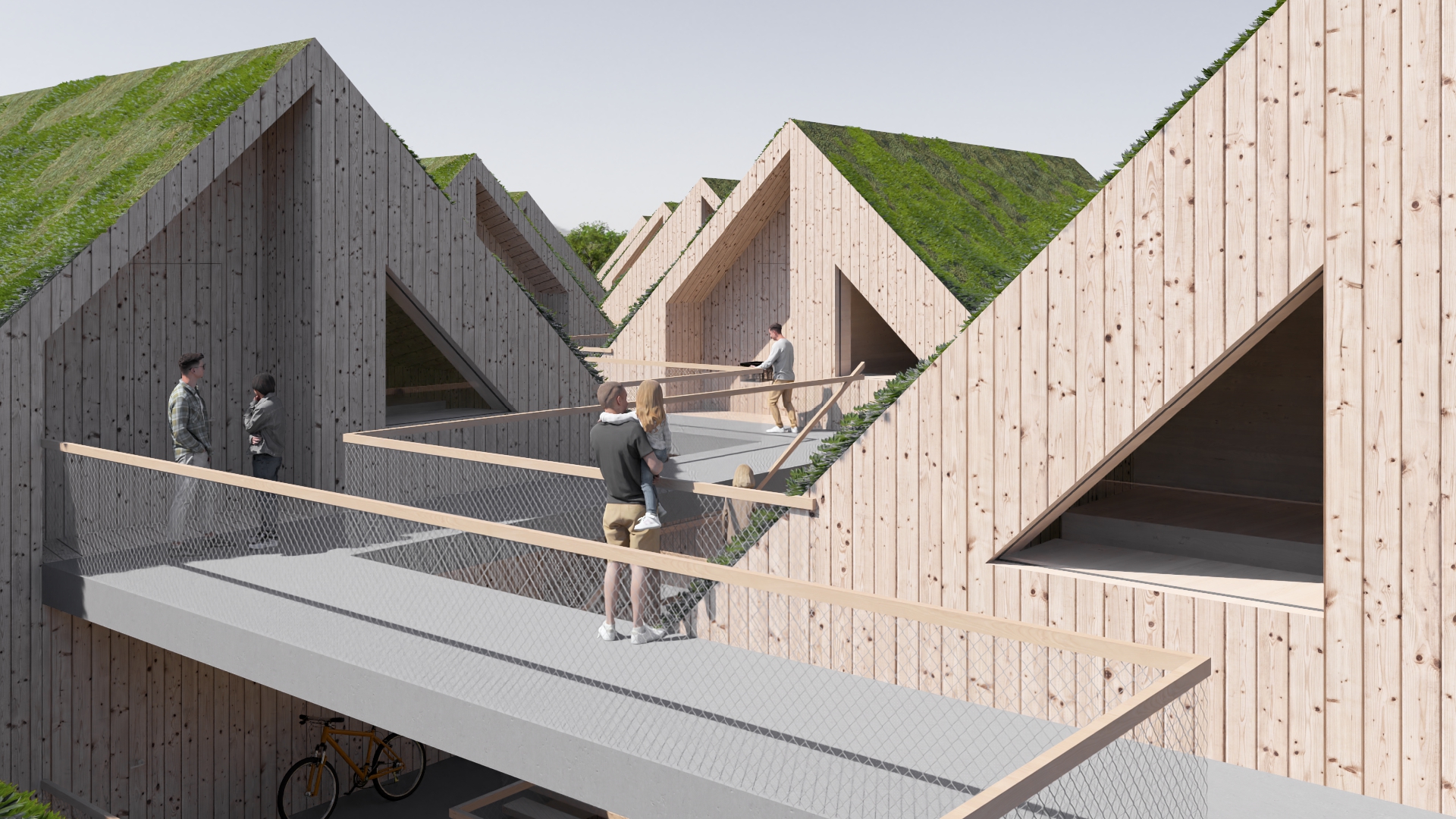
- Decentralized systems provide greater flexibility in architectural design. The need for large ducts, grilles, and ceiling spaces associated with centralized systems is minimized, allowing for a cleaner and more aesthetically pleasing interior.
- Decentralized ventilation units are generally quieter than centralized units because the equipment is distributed throughout the building. This can contribute to a calmer indoor environment, especially in areas sensitive to noise, such as a green residential estate on the edge of the Kampinos Forest.
view

view